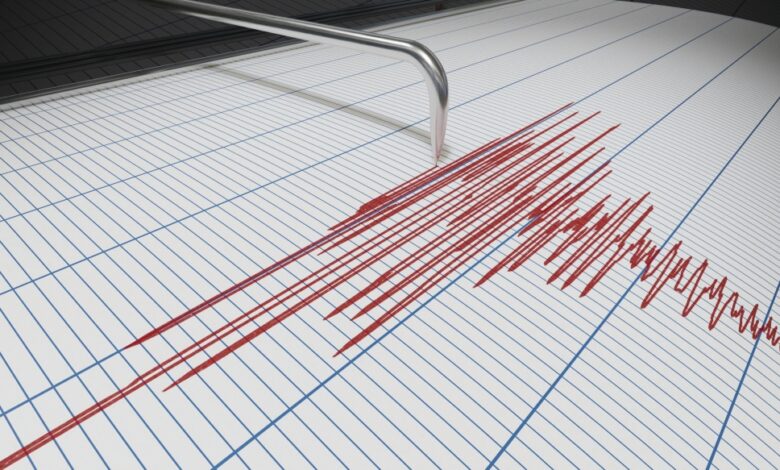

East Japan experienced a notable seismic event today, as a magnitude 6 earthquake struck the country's eastern coasts, prompting close monitoring by global and local geological monitoring agencies.
According to official data from the United States Geological Survey (USGS), the earthquake's epicenter was located off the coast of Noda, at a depth of approximately 20 kilometers below sea level. This relatively moderate depth may explain why the tremor was felt more clearly in areas near the epicenter. However, no official reports of casualties or significant damage to infrastructure have been received so far.
Japan and the Ring of Fire: A Geographical and Geological Context
Earthquakes of this magnitude are not uncommon in Japan, as the archipelago nation lies on the Pacific Ring of Fire. This region is a vast arc of intense seismic and volcanic activity encircling the Pacific Ocean basin. Scientific statistics indicate that Japan alone experiences approximately 20% of the world's earthquakes of magnitude 6 or greater annually.
The primary reason for this ongoing activity is Japan's complex tectonic location, where several major tectonic plates meet beneath it, including the Pacific Plate, the Philippine Plate, the Eurasian Plate, and the North American Plate. The constant collision and slippage between these plates leads to a buildup of pressure in the Earth's crust, which is released suddenly in the form of earthquakes.
Japanese preparedness and the impact of earthquakes
Despite the magnitude of the earthquake, which reached 6.0, the catastrophic effects in Japan are often limited compared to other countries, thanks to the country's rigorous engineering standards. Over decades, Japan has developed one of the world's most earthquake-resistant building systems, designing buildings and bridges to absorb tremors and move with them rather than collapse.
In addition, Japan has a highly sophisticated early warning system known as J-Alert, which sends immediate warnings via telephones, television and loudspeakers seconds before powerful seismic waves arrive, giving residents precious time to take shelter, and allowing bullet trains and factories to automatically stop to reduce risks.
Japanese authorities and meteorological agencies continue to closely monitor the situation in anticipation of any aftershocks that may follow the main earthquake, a routine procedure to ensure the safety of citizens and residents in coastal areas.