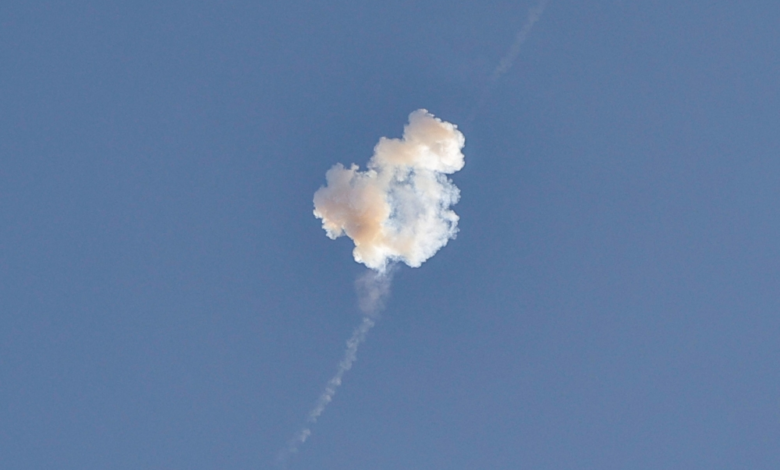
Ministry of Defense: Two cruise missiles intercepted in Al-Kharj, embassy attack condemned

announced Ministry of Defense Saudi
Details of the attack on the US embassy
In a related security development, reports indicated a small fire at the US Embassy in Riyadh, the Saudi capital, following a hostile attack carried out by two drones. The Kingdom of Saudi Arabia categorically rejected and condemned this attack in the strongest terms, describing it as a "heinous Iranian act," and affirmed that targeting diplomatic missions constitutes a serious crossing of red lines and a threat to security and stability in the region.
Saudi position and international laws
The Kingdom affirmed that the recurrence of these cowardly and unjustified attacks blatantly violates all international norms and conventions. In its statement, the Ministry cited international laws governing relations between states, specifically the 1949 Geneva Conventions and the 1961 Vienna Convention on Diplomatic Relations. These conventions clearly stipulate the necessity of providing full protection to diplomatic premises and personnel, granting them the necessary immunity to carry out their duties safely, even in cases of armed conflict. This makes this attack a clear violation of international law.
Saudi air defense efficiency
This announcement reaffirms the advanced capabilities of the Saudi Ministry of Defense in protecting the Kingdom's airspace. Saudi air defense systems are among the most sophisticated in the region, having repeatedly proven their effectiveness in intercepting ballistic missiles, explosive-laden drones, and cruise missiles. Military experts indicate that the successful interception in Al-Kharj highlights the constant vigilance of the air defense forces and their rapid response to sudden threats, thus enhancing the security and safety of citizens and residents throughout the Kingdom.
The importance of committing to the protection of diplomatic missions
From a political and diplomatic standpoint, the attack on the US embassy represents a dangerous precedent that necessitates a firm international response. Respect for the inviolability of diplomatic missions is a cornerstone of international relations, and any violation of it threatens communication channels between states. The Kingdom consistently emphasizes its unwavering commitment to protecting all diplomatic missions on its territory and considers any attack on them an attack on the sovereignty of the state and a grave violation of the principles of good neighborliness and international humanitarian law.