Egg prices during Ramadan: Price variations and ample supply in the markets

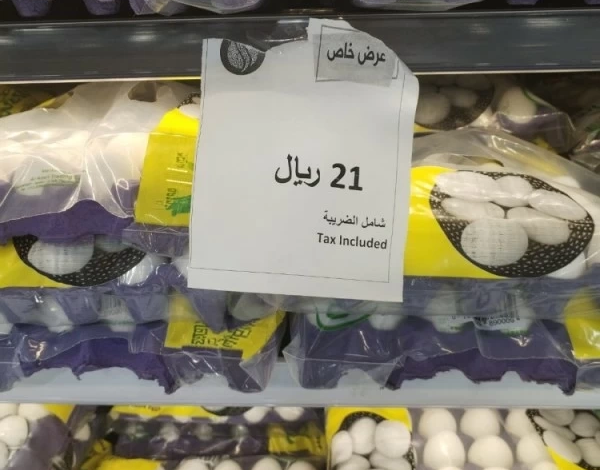
The markets and shopping centers in Jeddah witnessed a surge in activity with the arrival of the holy month of Ramadan, as a field tour revealed a large abundance and variety of egg products, coinciding with a noticeable difference in price levels that ranged between 15 and 36 riyals per tray, according to size, type, and producing company.
Price details and variety of options
A field survey revealed that egg prices start at a minimum of 14.99 riyals, gradually increasing to 35.95 riyals for premium, extra-large, or organic varieties. Market traders confirmed that this price variation is primarily due to the different producing companies, whether local or imported, thus offering consumers a range of options to suit their budgets and diverse needs.
The list of prices monitored in the markets included several levels, including: 17.99 riyals, 21.99 riyals, 22.50 riyals, 23.50 riyals, and 24.99 riyals, reaching the highest ceiling at 29.95 and 35.95 riyals.
The consumer context in Ramadan
Eggs hold a central place on the Ramadan table in Saudi Arabia and the Gulf countries, serving as a key ingredient in many daily dishes. This ranges from the pre-dawn meal (suhoor), which requires protein-rich foods to promote satiety, to their use in preparing Ramadan pastries and sweets. This long-standing consumption pattern explains the typical annual increase in demand during this holy month, prompting farmers and companies to boost their production capacity to meet market needs.
Economic factors affecting prices
In analyzing the reasons for price fluctuations, specialists and industry professionals explained that eggs are a commodity highly sensitive to market changes. Hamad Ali, a sales manager at a shopping center, pointed out that increased demand is not the only factor; operational costs also play a crucial role. These costs include global feed prices and shipping costs for imported eggs or production inputs (poultry feed) used by local farms, making the final price for the consumer a reflection of these global variables.
Supply chain response
For his part, Ahmed Hakami, a market trader, confirmed that there is a significant influx of produce from farms and producers within the Kingdom, as well as importers, to ensure there are no shortages. Nawaf Mahfouz added that markets in Jeddah are currently offering competitive prices to attract consumers, creating a balance between high purchasing power and the availability of goods.
This balance between supply and demand, despite price variations, reflects the strength of the Kingdom’s food supply chains and their ability to accommodate high consumption seasons such as Ramadan, thus ensuring the stability of local food security.