Egypt and the governance of the Nile River: A commitment to international law to ensure water security

The Arab Republic of Egypt reiterated its firm and unwavering position on the necessity of full adherence to the principles of international law in all matters pertaining to the governance of the Nile River, given its vital role as the lifeblood of the Egyptian people and a fundamental source of the country's national and water security. This reaffirmation comes within the framework of Cairo's ongoing diplomatic efforts to secure its historical and legitimate rights to the Nile waters and to advocate for fruitful regional cooperation based on mutual benefit and the avoidance of harm to the interests of downstream countries.
Historical background and strategic importance
Historically, Egypt's existence has been intertwined with the Nile River since the dawn of history. Ancient Egyptian civilization flourished along its banks, leading the Greek historian Herodotus to describe Egypt as "the gift of the Nile." Throughout the ages, the Nile has been more than just a waterway; it has been the primary driver of agriculture, social stability, and economic development. Egypt's current position is based on a number of historical agreements and international conventions governing the management of transboundary rivers, which guarantee a fair and equitable flow of water.
International law as a governing framework
Cairo consistently affirms that the governance of the Nile River cannot be subject to individual whims or unilateral decisions, but must be based on the rules of international law governing international rivers. These rules include the principle of "equitable and reasonable utilization," the principle of "not causing significant harm" to other riparian states, the principle of "prior notification," and the necessity of reaching legally binding agreements on the filling and operation of major dams. Egypt believes that the absence of such a binding legal framework threatens the stability of the region and opens the door to water disputes that could negatively impact regional peace and security.
Current challenges and regional dimensions
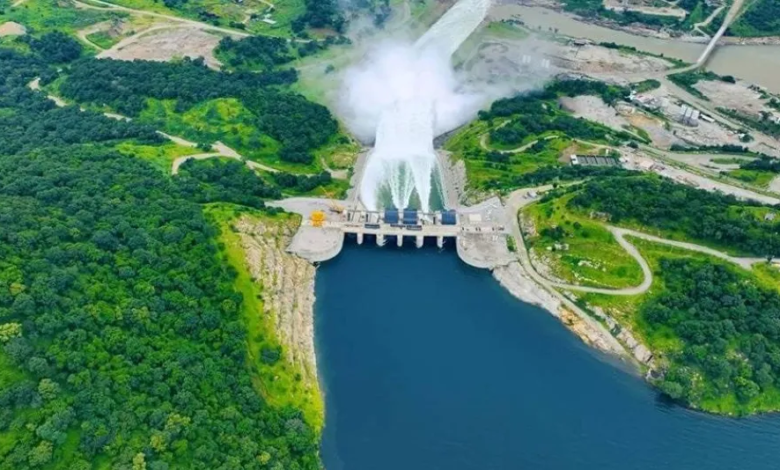
This Egyptian stance gains added significance given the current challenges facing the Nile Basin, most notably the Grand Ethiopian Renaissance Dam (GERD) issue. Egypt and Sudan are striving to reach a legally binding agreement that guarantees joint coordination during periods of drought and prolonged dry spells, thus preserving the operational capacity of downstream dams for electricity generation and the provision of drinking water and irrigation. Egypt's insistence on "governance" means establishing a clear institutional mechanism for managing shared water resources, moving away from a policy of imposing a fait accompli.
Expected impacts and future of cooperation
Adherence to international law in the governance of the Nile is not merely a legal requirement, but an existential necessity for Egypt, which suffers from water scarcity and falls below the global water poverty line. The success of the Nile Basin countries in establishing sound and equitable governance will open up vast opportunities for economic integration, electricity interconnection, and increased trade, transforming the river from a potential arena for conflict into a bridge for cooperation and sustainable development for all the peoples of the African continent.