Presidential directives to pay outstanding dues to petroleum companies in Egypt

Presidential directives to boost investments in the petroleum sector
Egyptian President Abdel Fattah al-Sisi issued firm directives to ensure the timely payment of dues owed to international oil companies operating in Egypt. This strategic move is intended as a key incentive to encourage these companies to intensify their exploration activities and increase exploration and production rates. The President also emphasized the importance of developing advanced mechanisms to enhance exploration and production activities, which will directly contribute to meeting the growing domestic energy needs and reducing the import bill that burdens the state budget.
The economic and regional context of the Egyptian energy sector
These directives are of paramount importance given Egypt’s relentless pursuit of establishing itself as a regional energy hub in the Eastern Mediterranean, an objective bolstered by the discovery of the Zohr natural gas field. Amid recent global and domestic economic challenges, including a foreign currency crisis that has led to the accumulation of outstanding payments, the political leadership recognizes that restoring foreign investor confidence through rescheduling and regular repayment is fundamental to ensuring the flow of foreign direct investment and the sustainability of national energy security.
Strategic meeting to monitor fuel pricing and secure supplies
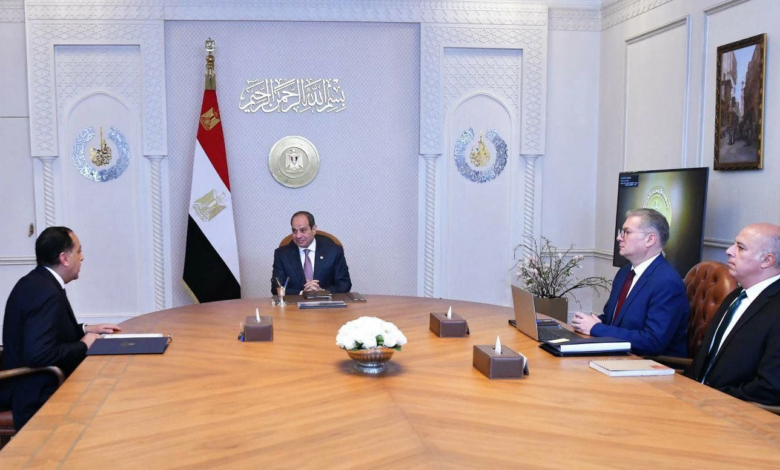
During a meeting held by President El-Sisi with Prime Minister Mostafa Madbouly and Minister of Petroleum and Mineral Resources Karim Badawi, the recent repercussions of escalating geopolitical events in the Middle East on global energy markets were reviewed. The meeting discussed recent fluctuations in petroleum and gas prices, with close monitoring of measures taken to ensure the availability of petroleum products for vital production sectors and power plants, guaranteeing uninterrupted electricity supply and supporting industrial activity.
Localization of modern technology: horizontal drilling and hydraulic fracturing
Ambassador Mohamed El-Shenawy, the official spokesperson for the Presidency, stated that the meeting addressed the progress of efforts to improve the performance of Egyptian companies and increase production volume. The Minister of Petroleum explained that the sector is accelerating its adoption of advanced technologies such as horizontal drilling and hydraulic fracturing . These technologies are considered a global standard for accessing unconventional oil and gas resources that are difficult to extract using conventional methods, thus paving the way for a significant leap in crude oil and natural gas production rates in both mature and new fields.
In this regard, President El-Sisi directed that this modern technology be made available and localized to increase productivity, drawing inspiration from successful global and regional experiences. He also emphasized the importance of establishing appropriate mechanisms to ensure the optimal economic application of these technologies, through strategic partnerships with leading global drilling and technology service and solutions companies.
Financial commitment and mineral wealth development
On the financial front, the Minister of Petroleum affirmed the sector's full commitment to continuing to reduce outstanding payments owed to foreign companies until they are fully settled. He noted that this is being done in parallel with strict adherence to current monthly payment schedules to prevent any future accumulation of arrears. The Ministry adopts a transparent approach based on continuous consultation with investors to meet their requirements and achieve the best systems that ensure mutual benefit.
The meeting was not limited to the petroleum sector, but extended to include a review of the work program for the aerial survey of mineral resources, a step aimed at creating an accurate map of natural resources in Egypt, which will contribute to attracting more investments to the promising mining sector, and supporting the national economy with diverse and sustainable sources of income.