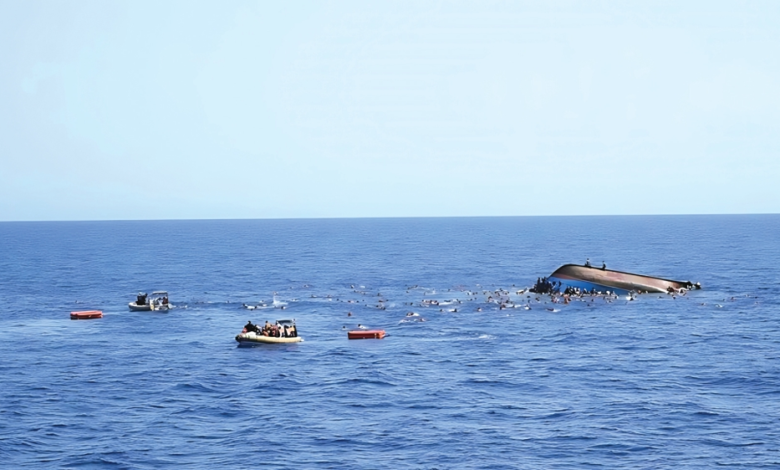

Mali has witnessed another tragic accident, resulting in the death or disappearance of dozens of people, after a traditional boat sank in the Niger River near the town of Diri, in the historic Timbuktu region of northern Mali. This incident once again highlights the dangers of river transport in the region, which relies almost entirely on the river as its primary mode of transportation.
Details of the tragic accident
The governor of the Timbuktu region stated in an official statement that the ill-fated boat was carrying approximately fifty people when the disaster occurred off the coast of Diri. Local authorities indicated that rescue teams rushed to the scene, where a number of bodies were recovered, while the search continues for those still missing in the river. Initial investigations by the relevant authorities suggest that the likely cause of the sinking was the boat's captains' failure to adhere to established river navigation regulations, leading to a loss of balance and the eventual capsizing.
The Niger River: A perilous lifeline
The Niger River, which flows through Mali from west to east, is the main artery of life for the population, particularly in the northern and central regions such as Timbuktu, Gao, and Mopti. Local communities rely heavily on traditional boats, known locally as "benas," for transportation and the movement of goods and agricultural produce between villages and towns along the river and its tributaries. Despite its vital importance, river transport is often perilous, especially during floods or storms, and some boats are dilapidated and lack regular maintenance.
Reasons for the recurrence of drowning incidents
This is not the first such incident in Mali, where drownings in the Niger River occur annually, leaving dozens of victims. Experts and observers attribute these tragedies to several key factors, most notably overloading, with boats carrying far more passengers and cargo than their capacity allows. Weather also plays a significant role, as does nighttime sailing, which is often prohibited by authorities due to the lack of adequate lighting and navigation, as well as the absence of life jackets and basic safety equipment on most of these traditional boats.
The security context and its impact on transportation
These incidents take on a new dimension given the unstable security situation in northern and central Mali since 2012. Due to armed attacks, road blockades, and the planting of improvised explosive devices by armed groups, many residents are forced to avoid roads and resort to the river as a relatively safer alternative for transportation, despite the risk of drowning. This increased pressure on river transport, coupled with the lack of development in boat infrastructure and docks, directly contributes to the rising accident rates, necessitating governmental and international intervention to improve safety standards and provide safer alternatives for citizens.