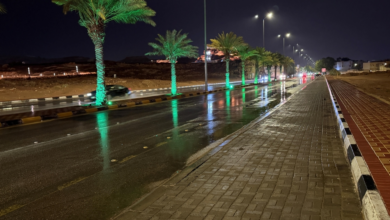
In a move aimed at enhancing quality of life and protecting public health in the Saudi capital, the Royal Commission for Riyadh City a comprehensive package of stringent environmental measures. These measures target complete on-site control of dust and emissions resulting from the city's growing construction projects. This initiative comes as Riyadh undergoes a major transformation to achieve the goals of the Kingdom's Vision 2030, which aims to position it among the top 10 city economies in the world.
The context of urban transformation and the importance of the decision
The capital city of Riyadh is witnessing an unprecedented urban development boom, encompassing mega-projects in infrastructure, housing, and tourism and entertainment. While these projects are of significant economic and developmental importance, the accompanying construction activities—including excavation, demolition, and material transport—pose a major environmental challenge that impacts air quality. Therefore, these new regulations are crucial as an integral part of the "Green Riyadh" initiatives and the "Quality of Life" program, ensuring that urban development does not come at the expense of the environment and public health.
Advanced monitoring technologies and real-time surveillance
The authority did not limit itself to issuing paper instructions, but relied on modern technology to ensure compliance, as the procedures included:
- Accurate automated monitoring: Projects are required to install real-time particulate matter (PM10) monitoring devices that capture readings every two minutes and are directly linked to the National Center for Environmental Compliance's database.
- Surveillance cameras: Enforce the installation of cameras at all project gates, with recordings to be kept for 90 days, to ensure that no vehicles leave in violation of regulations.
- Washing systems: Contractors are required to install automated truck tire washing systems or water immersion networks at entrances and exits to prevent dirt from being transferred to public roads.
Field controls to reduce pollution
The new regulations detail the operational mechanisms within the sites to reduce dust emissions at all stages of construction:
- Paving the tracks: Requiring contractors to pave truck tracks within the sites or use recycled asphalt, with continuous water spraying.
- Materials management: Limit the height of storage piles to a maximum of 3 meters and cover them daily, and use airtight silos with fine filters for cement.
- Wind resistance: In demolition cases, work is prohibited if the wind speed exceeds 15 km/h, with the use of water spray cannons with a range of up to 30 meters.
- Crushers: Crushers should be located at least 200 meters away from residential areas and schools, and equipped with advanced suction and filtration systems.
Project classification and oversight of residential villas
To ensure fairness and inclusivity, the authority adopted a three-tiered classification system for projects (low, medium, and high risk) based on area and traffic volume. The regulations did not exempt small projects such as residential villas, requiring owners to manually spray the soil during excavation, prohibiting the use of sieves on site, and forbidding the storage of waste outside the property boundaries.
The Authority has entrusted the tasks of field monitoring and imposing penalties to the National Center for Environmental Compliance Monitoring , and granted it broad powers that include issuing warnings, imposing financial fines, and ordering the immediate cessation of violating works, which reflects the seriousness of the concerned authorities in making Riyadh an environmentally friendly and sustainable city.