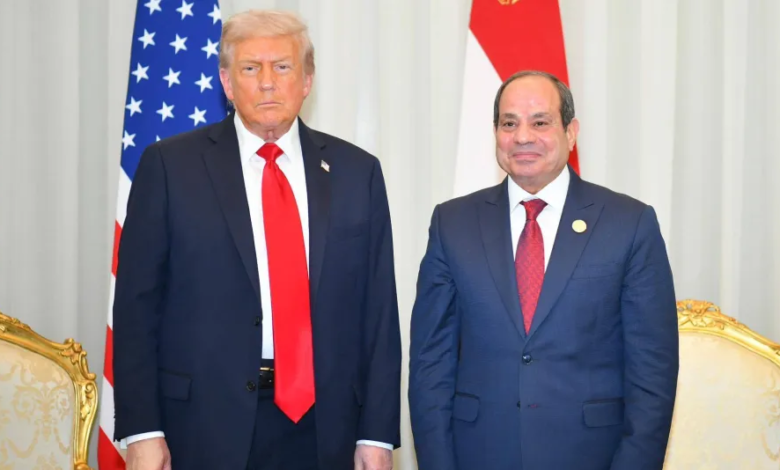
Egypt welcomes Trump's decision to designate the Muslim Brotherhood as a terrorist organization

Egyptian political and official circles have expressed their strong welcome for the news coming from Washington indicating that the administration of US President Donald Trump intends to designate the Muslim Brotherhood as a foreign terrorist organization. This move comes in response to persistent Egyptian and Arab demands for a firm international stance against the group, given the threat it poses to stability in the Middle East region.
Background to the American move and the presidential visit
This notable shift in the American position came after Egyptian President Abdel Fattah al-Sisi's visit to Washington in April 2019, where he held extensive talks with President Trump at the White House. The discussions focused primarily on counterterrorism and security cooperation between the two countries. Reports indicated that President Sisi provided his American counterpart with a comprehensive explanation of the dangers posed by the group's ideology and its negative impact on regional security, prompting the US administration to instruct the State Department and national security officials to begin the process of considering such a designation.
The historical context of the confrontation with the group
This stance is not a spur-of-the-moment decision, but rather an extension of a long process that began in Egypt following the events of June 30, 2013. In December of that year, the Egyptian government officially designated the Muslim Brotherhood a "terrorist organization" after the bombing of the Daqahliya Security Directorate. Egypt was followed in this decision by Saudi Arabia and the United Arab Emirates, which also designated the group as a terrorist organization, thus forming a unified Arab front aimed at cutting off the group's funding sources and reducing its political and media influence.
The importance of the decision and its expected effects
The potential US designation carries significant political and legal implications at both the regional and international levels. In practical terms, placing the group on the US Foreign Terrorist Organization (FTO) list would trigger broad economic sanctions, including freezing any assets the group or its leaders may hold within the United States and prohibiting financial transactions with them. The designation would also impose strict restrictions on travel to the United States for individuals associated with the group and criminalize providing any form of material or logistical support to it.
On the political front, this move represents a victory for Egyptian diplomacy and a confirmation of the validity of the Egyptian narrative regarding the nature of the group before the international community. If finalized, this decision is expected to exert immense pressure on countries that provide safe havens for the group's leaders or allow them to conduct political and media activities on their soil, potentially leading to fundamental shifts in the political alliances in the region and curtailing the activities of the international Muslim Brotherhood organization in Western capitals.