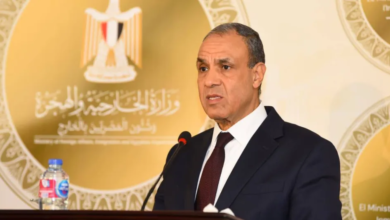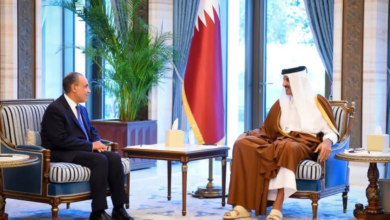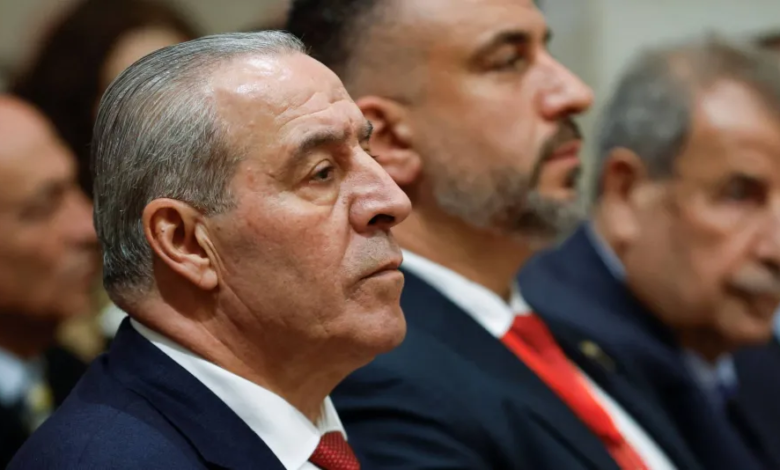

The head of the Egyptian General Intelligence Service received in Cairo a high-level Palestinian delegation that included the deputy head of the Fatah movement (who holds the position of deputy head in the organizational and political context) and his counterpart, the head of the Palestinian General Intelligence Service, as part of the ongoing Egyptian efforts to enhance joint coordination and consultation on the latest developments on the Palestinian scene.
Strengthening security and political coordination
The meeting addressed ways to strengthen bilateral relations and discussed the current challenges facing the Palestinian cause. This meeting is part of a series of periodic meetings that Cairo is keen to hold with Palestinian leaders to ensure a unified vision and stance, especially given the delicate regional circumstances. Discussions focused on the need to maintain calm and ways to support the Palestinian National Authority in confronting political, economic, and security challenges.
Egypt's historical role in the Palestinian issue
This meeting cannot be separated from the long historical context of Egypt's pivotal role in the Palestinian cause. Since 1948, Egypt has considered the Palestinian issue a matter of Egyptian and Arab national security. For decades, the Egyptian General Intelligence Directorate has played a key role in crucial matters, most notably the Palestinian reconciliation between Fatah and Hamas, the ceasefire in the Gaza Strip, and the prisoner exchange.
Cairo is the primary sponsor of all previously signed reconciliation agreements and is working tirelessly to end the Palestinian division, which is the greatest obstacle to realizing the Palestinian people's aspirations for an independent state. This meeting reaffirms Egypt's unwavering commitment to supporting the legitimate rights of the Palestinian people in accordance with international law.
The importance of the timing of the visit and its regional impact
This meeting is of particular importance given the sensitive timeframe the region is experiencing. On the Palestinian domestic front, there is an urgent need to unify internal ranks and address settlement policies and external pressures. Regionally, Egyptian-Palestinian coordination is the cornerstone of any Arab diplomatic initiative aimed at reviving the peace process or halting military escalation.
The meeting also carries international messages indicating that Egypt continues its role as an indispensable regional player in the Middle East stability equation, and that coordination with the legitimate Palestinian leadership is the only gateway to any future political solutions. These talks are expected to result in further practical steps to alleviate the suffering of the Palestinian people, both in the West Bank and the Gaza Strip, and to facilitate the movement of people through border crossings and the delivery of humanitarian aid.
In conclusion, coordination between the intelligence agencies of the two countries remains a safety valve for controlling the security and political rhythm, and preventing the situation from slipping into squares of violence that only serve the enemies of peace and stability in the region.