
The Middle East is witnessing unprecedented turmoil and a rapid escalation of events, putting diplomatic relations and regional alliances to a true test. At the heart of these developments, Egyptian-Turkish coordination as one of the most important pillars for calming tensions, especially after turning the page on nearly a decade of disputes and embarking on a new phase of strategic partnership between Cairo and Ankara.
A new era of diplomatic relations
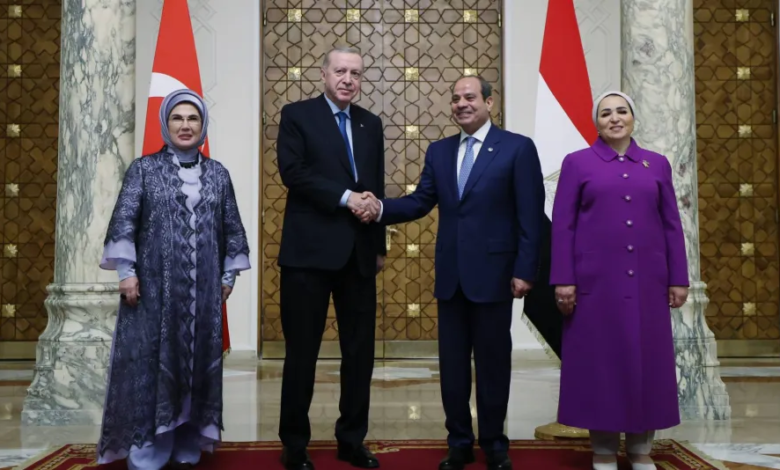
This test of the effectiveness of joint coordination comes at a highly sensitive time, following high-level reciprocal visits between the two countries' leaderships, culminating in Turkish President Recep Tayyip Erdoğan's visit to Cairo and Egyptian President Abdel Fattah al-Sisi's visit to Ankara. These diplomatic summits were not merely protocols, but rather established a high-level strategic cooperation council aimed at strengthening cooperation in the political, economic, and military fields, reflecting the two sides' desire to formulate a unified stance on the region's complex issues.
Challenges of the Palestinian issue and the situation in Gaza
The ongoing aggression against the Gaza Strip and its regional repercussions represent the most significant test of the strength of this coordination. Egyptian and Turkish visions largely converge on the necessity of an immediate ceasefire, the rejection of the forced displacement of Palestinians, and adherence to the two-state solution as the only path to stability. Both countries play a pivotal role in this matter; Egypt, by virtue of its geographical proximity and historical role in mediation, and Turkey, by virtue of its regional influence and international relations, are striving to unify efforts to pressure the international community to end the humanitarian suffering and prevent the conflict from escalating.
Strategic dimensions that transcend borders
Egyptian-Turkish coordination is not limited to the Palestinian issue; it extends to other sensitive matters affecting the national security of both countries, such as the situation in Libya, security in the Eastern Mediterranean, and the situations in Sudan and Somalia. The alignment between Cairo and Ankara on the Libyan issue, for example, is a crucial factor in maintaining the ceasefire and advancing the political process there. Furthermore, cooperation in the energy and gas sector in the Eastern Mediterranean represents a significant economic pillar that enables the two countries to overcome any past differences.
Future prospects and regional impact
The success of Egyptian-Turkish coordination in addressing current crises will not only reflect positively on the stability of both countries, but its impact will extend to reshaping the geopolitical map of the region. The existence of a strong axis uniting two major regional powers would create a strategic balance, preventing the region from sliding into a full-blown war and enhancing the prospects for diplomatic solutions over military ones. With both countries aiming to increase their trade volume to $15 billion, it appears that economic interests will form a safety net, ensuring the continuation and development of this political coordination to confront growing challenges.