
حذر المركز الإقليمي للتغير المناخي من تداعيات محتملة لتطور ظاهرة النينيو المناخية خلال الأشهر المقبلة، والتي قد تؤدي إلى صيف أكثر حرارة من المعتاد ومخاطر سيول مرتقبة في الأجزاء الغربية من المملكة العربية السعودية. وتأتي هذه التحذيرات بناءً على أحدث التقارير والرصدات التي تشير إلى احتمالية عالية لتجاوز حرارة سطح البحر في المحيط الهادئ معدلاتها الطبيعية، مما ينذر بتغيرات ملموسة في أنماط الطقس على مستوى العالم والمنطقة.
ما هي ظاهرة النينيو وكيف تتشكل؟
تُعد ظاهرة “النينيو” جزءاً من دورة مناخية طبيعية تُعرف باسم “التذبذب الجنوبي” (ENSO)، وهي نمط متقلب في درجات حرارة سطح المحيط الهادئ الاستوائي والرياح السطحية. خلال مرحلة النينيو، تضعف الرياح التجارية التي تهب من الشرق إلى الغرب، مما يسمح للمياه الدافئة بالتجمع قبالة سواحل أمريكا الجنوبية والانتشار شرقاً. هذا التسخين غير المعتاد لسطح المحيط يطلق كميات هائلة من الحرارة في الغلاف الجوي، مؤدياً إلى اضطراب في دورات الطقس العالمية، حيث يسبب موجات جفاف في مناطق وفيضانات وسيولاً في مناطق أخرى.
تاريخياً، ارتبطت سنوات النينيو القوية، مثل تلك التي حدثت في 1997-1998 و2015-2016، بظواهر جوية متطرفة حول العالم، بما في ذلك موجات حر قياسية، وأعاصير شديدة، وتغيرات في مواسم الأمطار، مما أثر بشكل كبير على قطاعات الزراعة والمياه والاقتصاد العالمي.
تأثير ظاهرة النينيو المتوقع على مناخ المملكة
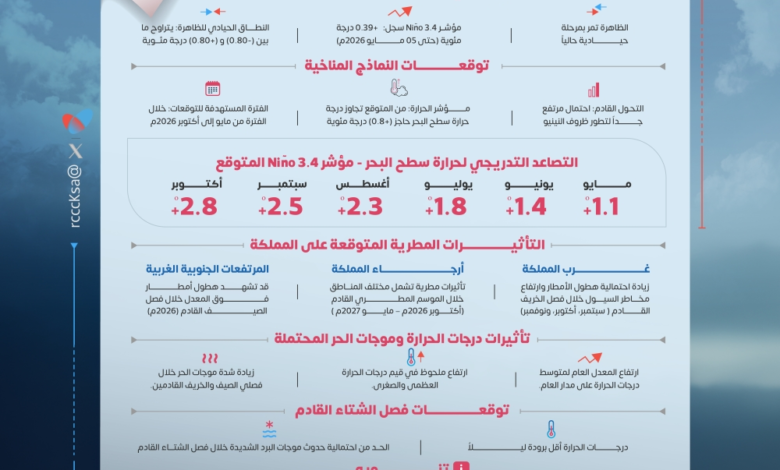
وفقاً للتقرير الصادر عن المركز، فإن المؤشرات الحالية تنذر بارتفاع تدريجي في الفروقات الحرارية عن المعدل الطبيعي. وأوضح التقرير أن مؤشر “Niño 3,4″، وهو المقياس الرئيسي للظاهرة، يتجه نحو قيم موجبة قد تتجاوز حاجز “+0.8” درجة مئوية، وهو العتبة الرسمية لبداية ظروف “النينيو”. وتشير التوقعات إلى مسار تصاعدي لهذه الفروقات الحرارية لتبلغ ذروتها خلال فصلي الخريف والشتاء القادمين.
يترتب على هذه التحولات تداعيات مباشرة على الخارطة المناخية المحلية، أبرزها:
- صيف وخريف أكثر حرارة: يتوقع أن تسجل متوسطات درجات الحرارة العظمى والصغرى ارتفاعات ملحوظة، مما يزيد من قسوة موجات الحر خلال فصلي الصيف والخريف.
- زيادة فرص الأمطار الغزيرة: من المرجح أن تزداد فرص هطول الأمطار بكميات تتجاوز المعدلات المعتادة على الأجزاء الغربية من المملكة، وتحديداً خلال أشهر الخريف (سبتمبر، أكتوبر، نوفمبر)، مما يرفع من مخاطر تشكل السيول.
- شتاء أكثر دفئاً: يقلل الارتفاع العام في درجات الحرارة من احتمالية حدوث موجات برد شديدة خلال فصل الشتاء القادم.
استعدادات وتحديات مقبلة
إن التغيرات المناخية المتوقعة تفرض تحديات وتستدعي رفع مستوى الجاهزية. فزيادة معدلات الأمطار في المناطق الغربية، رغم فائدتها المحتملة في تغذية الموارد المائية، تتطلب بنية تحتية قادرة على التعامل مع تدفقات السيول لتجنب المخاطر. كما أن موجات الحر الشديدة لها آثار صحية واقتصادية تستلزم تكثيف حملات التوعية واتخاذ الإجراءات الوقائية اللازمة. وأكد التقرير على وجود هامش من عدم اليقين في النماذج العددية، مشدداً على أهمية المتابعة المستمرة للرصدات والتحديثات لاتخاذ القرارات المناسبة في الوقت الملائم.