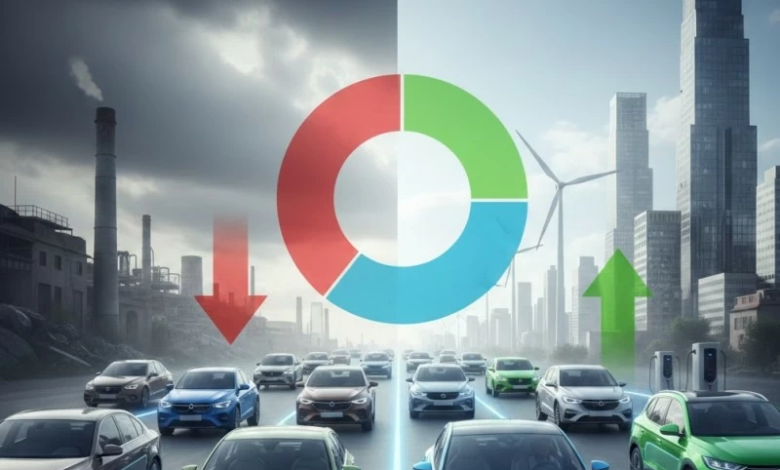
The automotive sector in Europe has undergone a significant transformation since the beginning of this year, with the latest data revealing radical changes in consumer preferences and market trends. While traditional internal combustion engines are experiencing a sharp decline, environmentally friendly vehicles are registering remarkable growth, reflecting the accelerating pace of the transition to clean energy amidst fierce global competition.
Overall sales decline as cleaner alternatives rise
Data released by the European Automobile Manufacturers' Association (ACEA) showed that total new car registrations fell by 3.5% year-on-year in January, reaching 961,382 units. This decline follows six consecutive months of growth, indicating a period of volatility in the European market.
The most striking aspect of this situation is the dramatic collapse in sales of gasoline-powered cars, which plummeted by a shocking 26% compared to the same period last year. This sharp decline has reduced the market share of gasoline cars to just over a fifth, a strong indicator of the beginning of the end of the era of absolute fossil fuel dominance in Europe.
Electric cars are leading the way
In contrast, electric and hybrid vehicles recorded positive figures reflecting changing consumer sentiment and regulatory trends in Europe. Sales of fully electric vehicles rose by 14%, while plug-in hybrids saw a significant jump of 32%. Conventional hybrids also recorded growth of 6%, and these figures collectively confirm that the future is firmly heading towards electric vehicles.
Chinese competition and the challenges facing traditional manufacturers
These figures cannot be viewed in isolation from the fierce competition facing traditional European manufacturers. Established European car companies are struggling to keep pace with the influx of Chinese models, which are characterized by their competitive pricing and advanced technology. This competition is placing immense pressure on European companies to accelerate development and reduce costs in order to maintain their market share at home.
Performance varied among major European markets
Geographically, performance was not uniform across the continent. Key markets such as Germany and France saw a decline in registrations, directly impacting the overall European sales rate. Experts attribute this, in part, to changes in government support policies and economic conditions in those countries. In contrast, other markets demonstrated greater resilience, with the UK and Italy recording increases in car sales, highlighting the varying economic conditions and strength of domestic demand across the continent.
Future prospects for the transport sector in Europe
This shift in January sales is a significant indicator of what the near future holds. As the European Union continues to tighten carbon emissions standards and support charging infrastructure, the gap between electric and conventional vehicle sales is expected to widen further. However, the biggest challenge remains the European industry's ability to withstand the Chinese giant, which offers electric alternatives at prices that appeal to a wider range of consumers.