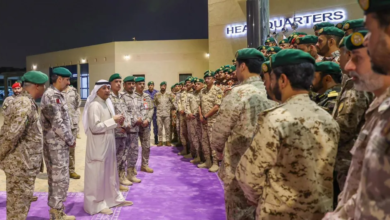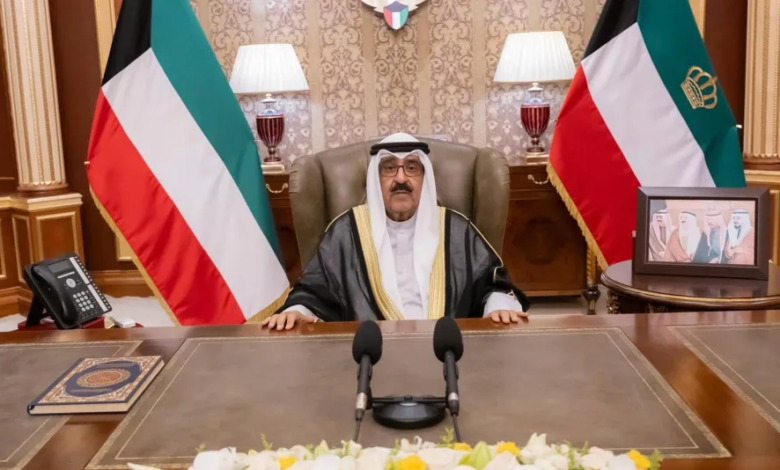
The Emir of Kuwait: We reject Iran's aggression and reserve the right to defend ourselves

The Emir of Kuwait affirms a firm stance against Iranian aggression
In statements reflecting firmness and transparency in addressing regional challenges, the Emir of Kuwait affirmed that his country had been subjected to unjustified attacks by Iran, while simultaneously emphasizing that Kuwait reserves its full and legitimate right to defend its sovereignty and national security. These statements come amidst highly sensitive regional circumstances, as the Gulf Cooperation Council (GCC) states strive to maintain regional stability and avert direct conflicts.
General context and historical background of relations
Kuwait's foreign policy has always been characterized by quiet diplomacy and a consistent pursuit of peaceful conflict resolution through dialogue. However, Kuwaiti-Iranian relations have experienced periods of tension and escalation over the decades. Historically, during the 1980s, amidst the Iran-Iraq War, Kuwaiti oil tankers and territorial waters were subjected to repeated attacks, prompting Kuwait to seek international protection to guarantee freedom of navigation. In more recent history, other security issues have arisen, such as the "Abdali Cell" case, in which Kuwaiti courts convicted individuals of spying for Iran and stockpiling weapons, leading to a temporary reduction in diplomatic representation between the two countries. Crises related to maritime borders also surface periodically, such as the dispute over the Dorra gas field, whose natural resources Kuwait and Saudi Arabia assert are their exclusive right under international law.
The importance of the event and its expected impact
Local impact
Domestically, these statements reinforce Kuwaiti national unity and assure citizens that the political leadership places the country's security and stability above all else. The Emir's message reassures the Kuwaiti public that the state is prepared and capable of protecting its resources and will not hesitate to take all necessary legal, diplomatic, and defensive measures to deter any threat.
Regional impact
Regionally, the Emir of Kuwait's statements resonated widely within the Gulf Cooperation Council and the Arab League. Gulf solidarity is considered a cornerstone in confronting foreign interference. Emphasizing the right to self-defense sends a clear message to Tehran about the necessity of respecting the principles of good neighborliness, refraining from interfering in the internal affairs of Arab states, and adhering to international charters and treaties that govern relations between nations.
International influence
Internationally, Kuwait holds a significant strategic position as one of the world's leading oil exporters and a key strategic ally of the United States and Western powers. Any threat to Kuwait's security is viewed as a direct threat to global energy security and the stability of the international economy. Therefore, Kuwait's positions are expected to garner broad international support, with renewed calls to ensure freedom of navigation in the Arabian Gulf and the Strait of Hormuz, and to pressure Iran to abide by international law and avoid escalation that could drag the region into unpredictable conflicts.
Summary of the Kuwaiti position
In conclusion, the Emir of Kuwait's statements embody a delicate balance between adhering to peace and diplomacy as a strategic approach and firmly rejecting any infringement upon national sovereignty. The right to self-defense is an inherent right guaranteed by the UN Charter, and it underscores that Kuwait, despite its small geographical size, possesses a strong political will and regional and international support that enables it to protect its security and the future of its generations against any unjustified aggression.