The arrival of Saad Al-Saud: the end of winter and the beginning of the spring equinox in Saudi Arabia

The Astronomical Observatory in Hawtat Sudair, affiliated with Majmaah University, announced a significant astronomical and climatic event awaited by the inhabitants of the Arabian Peninsula: the arrival of the "Saad Al-Saud" lunar mansion. This mansion, the third of the spring constellations according to traditional astronomical calculations, and the last of the Scorpion season, will last for 13 days, bringing with it the promise of milder weather and a definitive end to the cold, effectively signaling the end of winter.
Folklore and historical significance
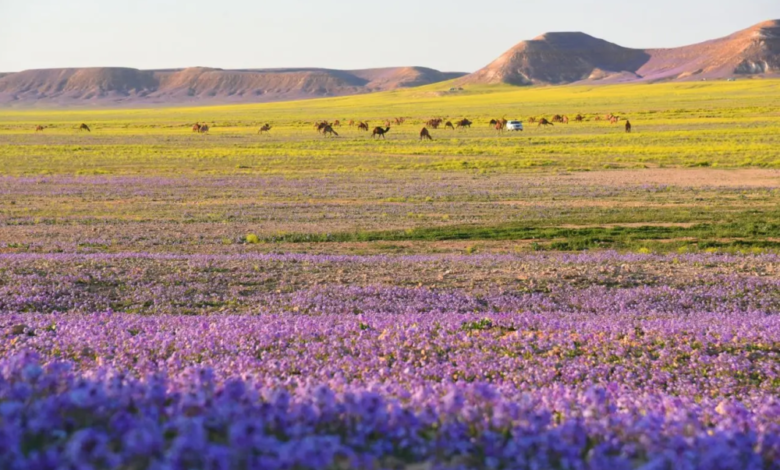
The rising of the star Saad Al-Saud holds a special place in Arab folklore and the collective memory of the inhabitants of the Arabian Peninsula. Many ancient songs and proverbs are associated with it, describing the accompanying climatic changes. Perhaps the most famous is the saying: "When Saad Al-Saud rises, skin softens, every hard rock melts, every branch turns green, every hidden thing flourishes, and people dislike sitting in the sun." These expressions accurately reflect the rise in temperatures, the warmth spreading through bodies and the earth, and the return of life to plants and trees after a long winter dormancy.
The vernal equinox and its astronomical characteristics
The observatory explained that this lunar mansion consists of three bright stars, one of which is among the brightest stars in the constellation Capricorn. Its appearance this year coincides with the approach of the vernal equinox, when the sun is directly over the equator, resulting in nearly equal day and night hours across most of the globe. This period is a crucial transitional phase, marking the beginning of spring's climatic dominance and the emergence of green vegetation, particularly in years with good rainfall.
A vital season for the agricultural sector
On the agricultural front, the arrival of the "Saad Al-Saud" season marks the beginning of a vital phase for farmers in the Kingdom. These days, farmers are actively engaged in the pollination of date palms, a delicate and crucial process to ensure the quality and abundance of date production, a key economic and nutritional resource for the Kingdom. Experts emphasize the importance of not delaying pollination and protecting the spathes from wind and rain to guarantee the success of the process.
It is also advisable during this period to intensify irrigation for existing winter crops such as wheat and barley due to increased evaporation with rising temperatures, and to start planting new crops such as late clover, beans, cowpeas, and cucurbits, while paying attention to fertilizing trees to promote their growth.
Climatic and environmental characteristics
Temperatures during this season typically range between 17 and 28 degrees Celsius, resulting in pleasant daytime temperatures and cool nights. However, the observatory warned of the usual weather fluctuations during transitional periods, with active southerly winds that may stir up dust and sand, in addition to the possibility of cumulonimbus cloud formation and scattered thunderstorms, phenomena known locally as "Sarayat.".
Environmentally, nature harmonizes with this warmth, as the leaves of the trees ripen, the flowers bloom, and migratory birds such as geese and small cranes begin their journey, while resident birds continue to build their nests and hatch their young, in a scene that embodies the renewal of natural life.