Environment authorities crack down on violators of marine fishing regulations at Thuwal port

As part of ongoing efforts to protect and enhance the sustainability of natural resources, the leadership of the Ministry of Environment, Water and Agriculture branch in the Makkah region conducted a large-scale field inspection tour at Thuwal Port. This tour aimed to enforce strict compliance with marine fishing regulations and ensure the implementation of controls primarily designed to protect fish stocks from depletion, in line with the Kingdom's Vision 2030 objectives of preserving the marine environment and achieving food security.
Environmental leaders oversee the progress of field work
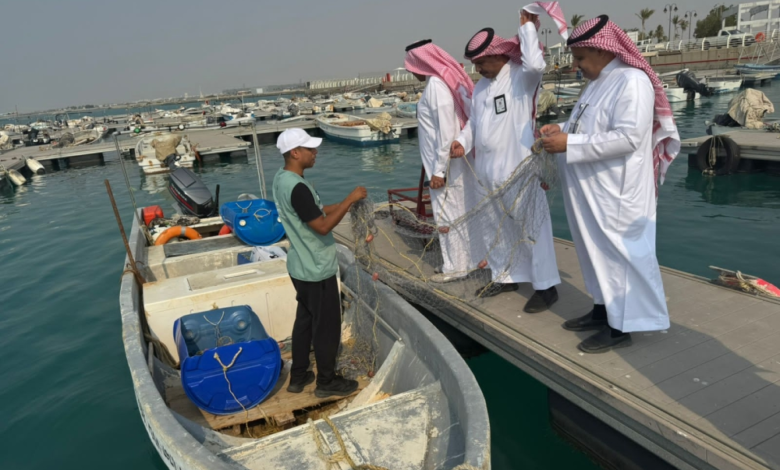
This field visit was led by the Director of the Agriculture Department, Engineer Mohammed Al-Shehri, with the participation of his deputy, Dr. Mohammed Al-Jamaan, and the Head of the Fisheries Department, Ibrahim Al-Maliki. The visit aimed to directly observe the monitoring operations and ensure the implementation of regulations on the ground. The port facilities and the operational procedures followed by both fishermen and recreational boaters were inspected.
The importance of adhering to environmental regulations in the Red Sea
These campaigns are of paramount strategic importance, given the Red Sea coast's unique biodiversity and coral reefs, which are home to thousands of marine organisms. These initiatives are part of a broader national effort to regulate the fishing sector, with the Ministry working to combat overfishing and the use of prohibited fishing gear that damages the benthic environment and depletes juvenile fish stocks before they reach reproductive maturity. Maintaining ecological balance in areas like Thuwal not only benefits the local environment but also contributes to the stability of food supply chains for the entire western region.
Monitoring violations and sustainable awareness
The monitoring campaign focused meticulously on observing fishermen's compliance with the agricultural system and its implementing regulations, while also conducting a comprehensive inspection of fishing equipment to ensure its conformity to approved technical specifications and its non-harmful effect on the sensitive marine environment. Efforts were not limited to monitoring, deterrence, and imposing penalties; they also included a crucial awareness-raising component. Direct guidance messages were delivered to fishermen to increase their awareness of the risks associated with violations and to strengthen their sense of social responsibility towards their environment and their livelihoods.
A comprehensive food security strategy
The Department of Agriculture explained that these field inspections are a crucial part of a strategic preventative monitoring plan aimed at eliminating violations before they escalate. Officials emphasized that the sustainability of fish stocks is a cornerstone of national food security, and that adherence to regulations is the only way to ensure a continuous supply of resources for future generations. They affirmed that inspection tours will continue in all ports across the region to guarantee a marine environment free of violations.