The Haramain train increases its capacity to serve 2.2 million pilgrims in the 1445 season

Exceptional preparations for the Hajj season: The Haramain High-Speed Railway enhances its operational capacity
In a move reflecting the extensive preparations undertaken by the Kingdom of Saudi Arabia to serve pilgrims, the Saudi Railways Company (SAR) announced its operational plan for the 1445 AH Hajj season, which includes increasing the capacity of the Haramain High-Speed Railway to over 2.21 million seats. This significant increase comes in response to the growing demand for transportation services between the two holy cities of Mecca and Medina, and to facilitate the pilgrims' spiritual journey.
SAR explained that the plan includes operating more than 5,308 flights throughout the season, an increase of approximately 11% compared to last year. This increase in the number of flights will provide more than 210,000 additional seats, ensuring smoother movement for pilgrims and reducing waiting times. During peak times, the number of daily flights will reach 142, guaranteeing flexible and reliable transportation options for pilgrims.
Project Background: A qualitative leap in serving pilgrims
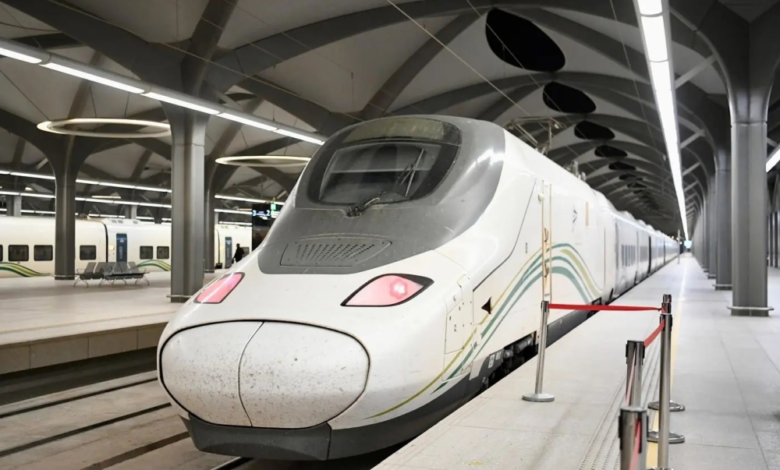
The Haramain High-Speed Railway is one of the Kingdom's largest infrastructure projects and an integral part of Saudi Vision 2030 and the Pilgrims' Service Program. Officially launched in 2018, the project revolutionized transportation between the Two Holy Mosques. Historically, pilgrim travel relied on traditional methods that were time-consuming and laborious. Today, the train offers a modern and safe travel experience, covering the 453-kilometer distance between Mecca and Medina in approximately two hours and twenty minutes, at an operating speed of up to 300 kilometers per hour.
The Haramain High-Speed Railway fleet extends to include 35 environmentally friendly electric trains, with a capacity of 417 seats per train distributed between business and economy classes, and equipped with the latest amenities and services to ensure a comfortable travel experience for pilgrims and Umrah performers.
Importance and expected impact: local and international dimensions
Domestically, the increased capacity of the Haramain High-Speed Railway significantly reduces pressure on the road network between major cities during the Hajj season, thus alleviating traffic congestion and enhancing safety. The railway also facilitates the arrival of pilgrims by air via its station directly connected to King Abdulaziz International Airport in Jeddah, making it a vital link in the integrated transportation system.
On the international level, this step reinforces the Kingdom's position as a leader in crowd management and providing advanced logistical services for the world's largest religious gathering. Providing transportation of this scale and efficiency reflects the Kingdom's commitment to offering the highest quality services to pilgrims from around the world, leaving a lasting positive impression and supporting the objectives of the National Transport and Logistics Strategy in establishing the Kingdom as a global logistics hub.