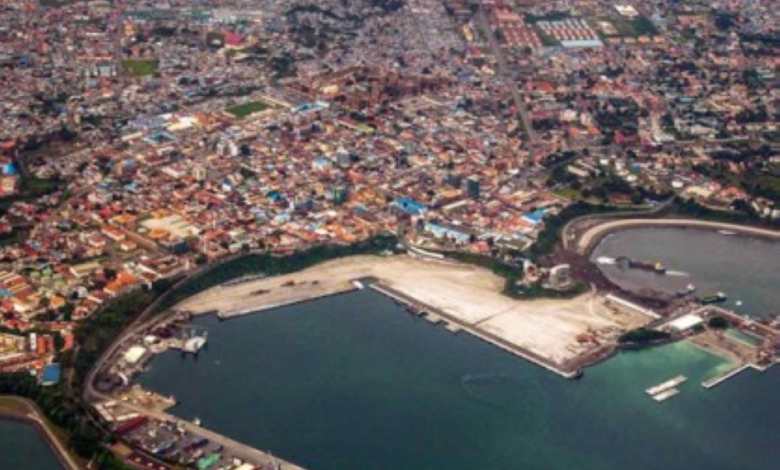

In a historic move that will reshape the country’s political and administrative landscape, the Republic of Equatorial Guinea has officially announced the change of its capital from the coastal city of Malabo to the modern city of Ciudad de La Paz, by presidential decree issued on Saturday. The decision will take immediate effect with a specific timeframe for the transfer of sovereign institutions.
Details of the presidential decree and the timeframe
President Teodoro Obiang Nguema Mbasogo, who has ruled the country for nearly 47 years, issued a decree mandating the relocation of the government headquarters and central administrative operations to the new capital. The presidential decree requires all presidential services, constitutional bodies, government agencies, and public companies to take all necessary logistical and administrative measures to complete the transfer of their headquarters to Ciudad de La Paz within a maximum of one year.
From "Oyala" to "City of Peace"... the old dream
This decision was not made on a whim, but rather the culmination of a massive project first announced by President Obiang in 2008. The city, formerly known as Oyala, was renamed Ciudad de la Paz in 2017, meaning "City of Peace" in Spanish. Designed from the ground up in the heart of the rainforest, it is envisioned as a modern administrative center comparable to world capitals, leveraging the country's oil wealth.
Strategic and geographical motives for transport
President Mbasogo justified the relocation decision on the grounds of pressing "strategic reasons," describing the new city as "the ideal choice to house the capital." The geographical significance of this change lies in the location of the two capitals; the old capital, Malabo, is situated on Bioko Island, completely separated from the African mainland, thus isolating it from the majority of the country's territory and population.
In contrast, Ciudad de La Paz is located in the province of Djibloho in the heart of the continental region (Rio Muni), giving it a central location that is easily accessible from all parts of the country, strengthening the state’s security and administrative grip, and providing strategic depth for the government away from the direct maritime threats that coastal and island cities may face.
Addressing overpopulation and urban growth
The presidential decree also cited demographic and economic factors driving this relocation, most notably the rapid and unregulated urban growth in the former capital, Malabo, and the economic capital, Bata. Both cities have experienced significant waves of migration from rural areas in recent years, placing immense pressure on infrastructure and services. The move aims to create a new development hub inland, alleviate population pressure on coastal cities, and distribute wealth and services more equitably across the country's regions.