Erdogan: Turkish-Saudi relations are a strategic pillar for the stability of the region

In an exclusive interview with Asharq Al-Awsat newspaper, Turkish President Recep Tayyip Erdoğan affirmed that the relationship between his country and the Kingdom of Saudi Arabia is of paramount strategic importance, not only to the two nations but also to the future of peace, stability, and prosperity in the entire Middle East region. This statement reinforces the positive trajectory that relations between the two major regional powers have witnessed recently.
A new era of diplomatic and economic cooperation
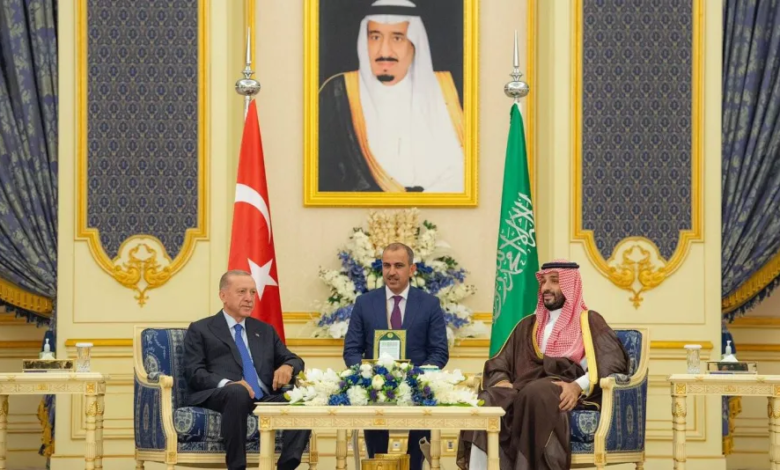
The Turkish president's remarks come at a crucial time, as the world and the region witness rapid geopolitical shifts. Over the past few years, Ankara and Riyadh have successfully turned the page on past disagreements and ushered in a new era of fruitful cooperation. This phase culminated in high-level reciprocal visits between the two countries' leaderships, paving the way for the signing of cooperation agreements encompassing defense, energy, and direct investment—reflecting a shared desire to deepen their strategic partnership.
Economic integration and Vision 2030
From an economic perspective, observers believe that the growing Turkish-Saudi relationship presents a golden opportunity for economic integration that serves the interests of both nations. Turkey, with its significant industrial and construction capabilities, aspires to contribute effectively to the mega-projects launched by the Kingdom as part of its Vision 2030. Conversely, the Turkish market represents a promising destination for Saudi investments, particularly in the tourism, real estate, and defense industries. This economic cooperation extends beyond mere trade to include technology transfer and the localization of industries, thus reinforcing the concept of prosperity that President Erdoğan alluded to.
A pillar of regional security and stability
On the political and security fronts, both Turkey and Saudi Arabia recognize that coordinating their positions is crucial to confronting the challenges facing the region. From the Palestinian issue and the war in Gaza to the situations in Syria and Yemen, Turkish-Saudi alignment represents a counterbalancing force capable of pushing for peaceful and sustainable solutions. President Erdoğan's description of the relationship as a "strategy for peace" clearly indicates that both countries possess the political and diplomatic capacity to guide the region toward stability and spare it further conflicts and international polarization.
In conclusion, the emphasis on the strategic importance of Turkish-Saudi relations reflects a deep awareness of the inevitability of cooperation between major powers in the Islamic world, as this alliance is seen as a cornerstone in building a more stable and just regional system that guarantees the interests of the region’s peoples and enhances their standing on the international stage.