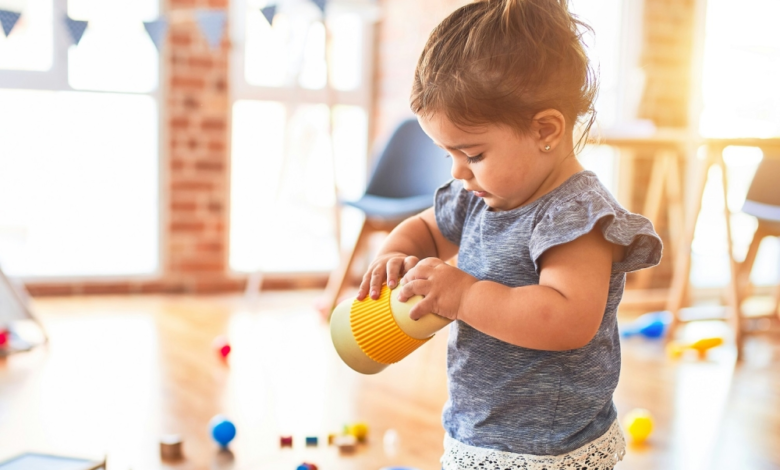

The Education and Training Evaluation Commission in Saudi Arabia announced significant developments in the National School Evaluation, Classification, and Accreditation Program, expanding its scope to include kindergarten and early childhood education. The Commission revealed figures reflecting the educational field's response, showing that 57% of kindergartens and 42% of early childhood schools have completed the self-evaluation requirements, a crucial step in ensuring the quality of education at its foundational stages.
Strategic context and the importance of the establishment phase
This educational shift comes within a broader strategic context closely linked to the Human Capital Development Program, one of the most important programs of the Kingdom's Vision 2030. Historically, the focus has often been on the upper stages of general education, but the current transformation recognizes that true investment begins in the early years. Early childhood is the foundation upon which a student's cognitive and behavioral skills are built; therefore, subjecting this stage to rigorous assessment standards represents a qualitative leap in the history of Saudi education, aiming to bridge the gap between educational outcomes and the requirements of global competitiveness.
Evaluation methodology and quality stages
The authority adopted a sequential scientific methodology to ensure the accuracy of the results. This process goes beyond simply collecting data; it involves three main stages:
1. Self-assessment: This is the current stage, initiated within the school to foster a culture of internal quality.
2. External assessment: This is conducted by specialists from the authority to verify the reliability of the data and results.
3. School ranking: This is the final stage, which determines the school's position on the quality scale, creating a positive competitive environment.
Expected impact locally and regionally
This expansion of assessment processes is expected to have a tangible impact on several levels:
Locally, it will enable parents to choose the most suitable educational environment for their children based on reliable and transparent rankings, thus encouraging investors in both the private and public education sectors to raise their standards.
Regionally and internationally, this model positions the Kingdom among the leading countries that prioritize early childhood education, enhancing the Saudi education system's standing as a pioneering model in the region that applies comprehensive quality standards from kindergarten to high school. This will, in turn, lead to improved performance for the Kingdom in international tests and global human capital indicators.
The Authority affirms that this methodology is not merely a routine procedure, but rather a leading Saudi model globally for ensuring and controlling the quality of education and training, aiming to achieve institutional excellence and build a globally competitive generation in accordance with the aspirations of the wise leadership.