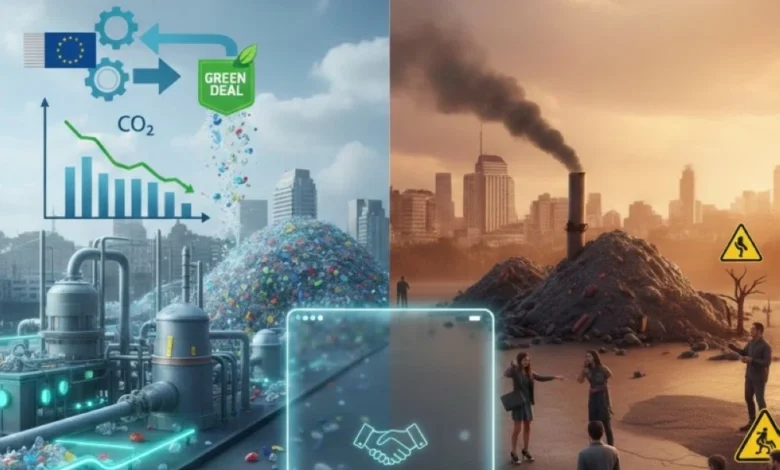

في خطوة مفصلية تهدف إلى تعزيز جهود القارة العجوز في مكافحة التلوث البلاستيكي، أقرت الدول الأعضاء في الاتحاد الأوروبي (27 دولة) رسمياً اعتماد تقنية «إعادة التدوير الكيميائي» كأداة معترف بها ضمن التشريعات البيئية الجديدة. ويأتي هذا القرار ليسمح باحتساب المواد الناتجة عن هذه العملية ضمن النسب الإلزامية للمحتوى المعاد تدويره في العبوات البلاستيكية، وهو ما يمثل تحولاً جذرياً في سياسات إدارة النفايات الأوروبية.
أهداف طموحة لعام 2030
بموجب الاتفاق الجديد، وافقت الدول الأعضاء على إدراج التدوير الكيميائي ضمن الآليات المعتمدة لتحقيق الهدف المتمثل في أن تحتوي العبوات البلاستيكية على ما لا يقل عن 30% من المواد المعاد تدويرها بحلول عام 2030، مع هدف مرحلي يبلغ 25% في الوقت الراهن. وقد وصفت المتحدثة باسم المفوضية الأوروبية، آنا كايسا إيتكونن، هذا القرار بأنه «خطوة أولى مهمة» نحو وضع إطار تنظيمي شامل وموحد لهذه التقنية الواعدة على مستوى الاتحاد.
ما هو التدوير الكيميائي ولماذا هو مهم؟
تكتسب هذه الخطوة أهميتها من الطبيعة التقنية لعملية التدوير الكيميائي، التي تختلف جذرياً عن التدوير الميكانيكي التقليدي. فبينما يقوم التدوير الميكانيكي بطحن البلاستيك وإعادة صهره (مما قد يقلل من جودته بمرور الوقت)، تعمل المعالجة الكيميائية على تفكيك النفايات البلاستيكية إلى مكوناتها الجزيئة الأساسية (الزيت أو الغاز). تتيح هذه العملية إعادة تصنيع بلاستيك جديد بجودة تضاهي المواد الخام البكر، مما يجعلها حلاً مثالياً للتعامل مع النفايات البلاستيكية المختلطة أو الملوثة التي يصعب تدويرها بالطرق التقليدية.
جدل بين الصناعة والبيئة
رغم الترحيب الرسمي والصناعي، لا يزال القرار يواجه انتقادات من بعض المنظمات البيئية. يرى المؤيدون، بما في ذلك شركات البتروكيماويات الكبرى، أن هذه التقنية ضرورية لخفض انبعاثات ثاني أكسيد الكربون وتقليل الاعتماد على الوقود الأحفوري في إنتاج البلاستيك. في المقابل، يبدي المعارضون قلقهم بشأن التكلفة العالية لهذه التقنية واستهلاكها الكثيف للطاقة أثناء عملية المعالجة، محذرين من أن تكون ذريعة لاستمرار إنتاج البلاستيك بمعدلات عالية بدلاً من تقليله.
الأثر الاقتصادي والاستراتيجي
من المتوقع أن يفتح هذا التشريع الباب أمام استثمارات ضخمة في قطاع التكنولوجيا الخضراء داخل أوروبا، حيث تسعى الشركات لتطوير منشآت قادرة على معالجة ملايين الأطنان من النفايات التي كانت تُطمر أو تُحرق سابقاً. ويعد هذا التحول جزءاً لا يتجزأ من «الصفقة الأوروبية الخضراء» التي تهدف إلى تحويل أوروبا إلى أول قارة محايدة مناخياً، مما يضع معايير جديدة قد تضطر الأسواق العالمية لاتباعها مستقبلاً لضمان نفاذ منتجاتها إلى السوق الأوروبية المشتركة.