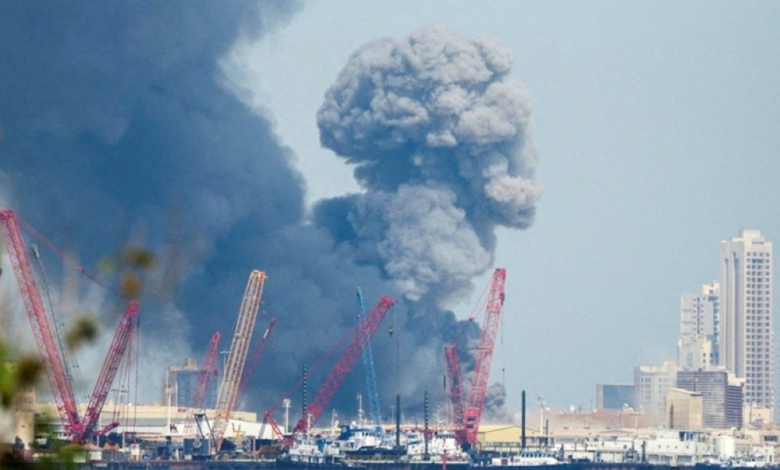
In a firm stance reflecting the growing concern of the international community, the European Union stressed that Iran’s recent attacks on a number of Middle Eastern countries cannot be justified in any way, warning that the region stands on the brink of a dangerous turning point that could lead to a long-term conflict.
Strong warnings from Brussels
This official stance was expressed by Kaya Kallas, the EU's foreign policy chief, following an emergency meeting of the 27 member states' foreign ministers held via video conference. Kallas stressed that the current escalation in the Middle East would not be in anyone's interest, clearly stating that the region would lose a great deal from any protracted war.
The European official, speaking on behalf of the member states, explained that the ongoing events in Iran and its military actions must not lead to catastrophic scenarios that threaten regional and international security. She stated, “The current events in Iran must not lead to an escalation that could threaten the Middle East, Europe, and beyond, with unpredictable consequences, including economic ones.”.
Context of regional tension and historical background
These European statements come at a time of unprecedented turmoil in the Middle East. Historically, relations between Iran and its neighbors, as well as Western powers, have been fraught with tension, particularly concerning its missile program and regional influence. The European Union fears that the recent attacks could shatter traditional rules of engagement, potentially leading to direct confrontations that may prove difficult to contain through conventional diplomatic channels.
Potential repercussions: from the economy to global security
European concerns are not limited to the security and military aspects alone, but extend to include wide-ranging economic and geopolitical repercussions:
- On a regional level: The continuation of the attacks threatens to strike at the region's vital infrastructure, disrupt development paths, and increase the suffering of peoples already suffering from multiple crises.
- At the international and European levels: The European Union has clearly pointed to the “economic consequences,” which observers interpret as concerns about the impact on global energy supplies and rising oil prices, potentially dealing a severe blow to the global economy, which is still recovering from previous crises. Furthermore, Europeans fear that the expansion of the conflict could lead to new waves of displacement and direct security pressures on the continent.
The European Union concludes its position with an implicit and continuous call for all parties to exercise restraint, stressing that diplomatic solutions remain the only option to spare the region the horrors of a war that could consume everything.