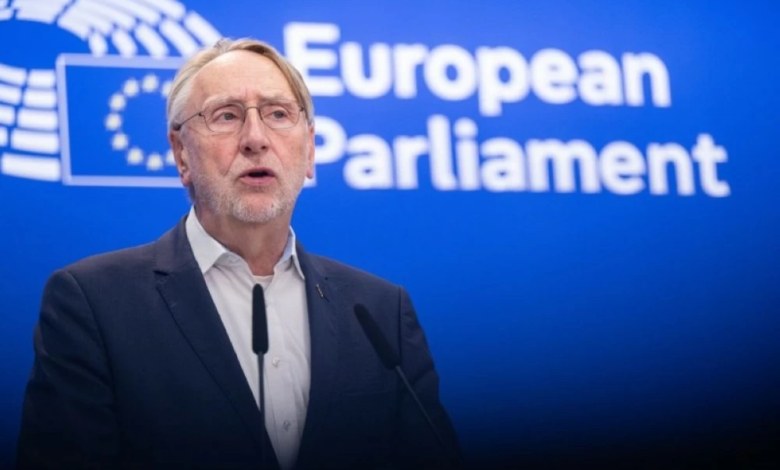

In a move reflecting escalating tensions in transatlantic trade and political relations, Bernd Lang, chair of the European Parliament's trade committee, announced that the parliament is formally suspending the implementation of the tariff agreement reached last year between the United States and the European Union. This decisive action comes as a direct response to recent US threats to impose new tariffs, which arose amid the escalating diplomatic dispute over Greenland.
Background to the conflict: Greenland at the heart of the storm
This decision cannot be separated from the broader context of escalating geopolitical tensions surrounding the Arctic region. Greenland, a Danish territory, possesses a vital strategic location and vast natural resources, making it a focal point for major powers. The current crisis stems from the declared American desire to bolster its influence in the region, a move met with staunch European rejection of attempts to treat sovereign territories as mere commercial transactions. This has transformed the political dispute into an economic confrontation that threatens the stability of global trade.
Davos statements and deepening the divide
In a related development, US President Donald Trump's remarks at the Davos Economic Forum further inflamed tensions. In a lengthy speech, Trump asserted that the United States seeks a strong and united West, accusing Europe of "destroying itself" with its current policies. He emphasized the need for NATO member states to be capable of defending themselves, stating explicitly that "no country but America can defend Greenland," a remark Europeans interpreted as a serious insinuation against Danish and European sovereignty.
A firm European rejection and unacceptable threats
These statements and economic threats were met with widespread condemnation from European leaders. French President Emmanuel Macron and Norwegian Prime Minister Jonas Gahr Støre described Trump's threats as "unacceptable," emphasizing that economic blackmail has no place among allies. The European Union also categorically rejected any scenario involving the United States annexing the Arctic island or using tariffs as a means of pressure, warning against entering a "dangerous spiral" that could harm the fragile global economy.
Serious deterioration and European unity
Faced with the threat of additional 10% tariffs, European countries demonstrated remarkable unity. Britain, Denmark, Finland, France, Germany, the Netherlands, Norway, and Sweden issued a joint statement last Sunday, asserting that these threats undermine the foundations of historic transatlantic relations and portend a serious deterioration in the Western alliance. Economic analysts believe that the European Parliament's suspension of the tariff agreement sends a strong warning that Europe is prepared to use its economic tools to defend its interests and the sovereignty of its member states.