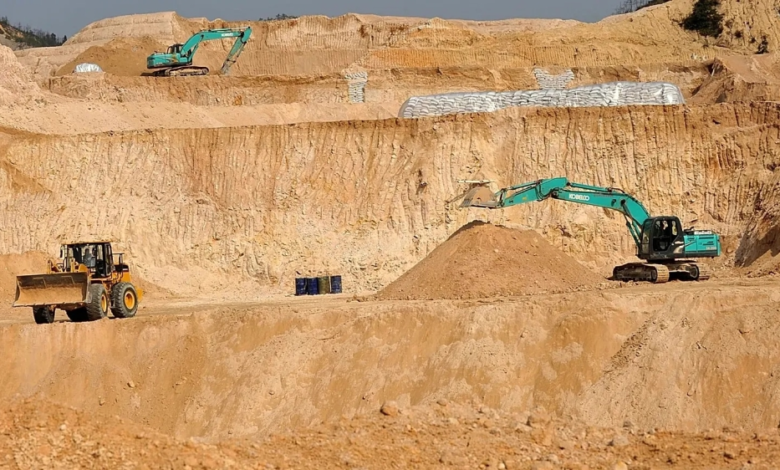

A high-level delegation of European officials is heading to Washington, D.C., on Wednesday in a strategic move aimed at forging new agreements with the administration of U.S. President Donald Trump on the issue of “rare earth minerals,” which are the raw materials that have become the backbone of modern industries and the global economy.
The European delegation is led by Commissioner Stefaan Sigurdsson, who will hold intensive ministerial talks hosted by US Secretary of State Marco Rubio. These moves come as Western powers are actively seeking to reduce their over-reliance on China in vital supply chains and coordinate joint efforts rather than engage in destructive competition among allies.
Strategic importance that goes beyond economics
These discussions are of paramount importance given the pivotal role that rare earth metals play in the modern era. These elements are not merely commodities; they are indispensable components in the manufacture of electric vehicles, wind turbines, smartphones, and semiconductors. They also form a cornerstone of advanced defense and military industries, making securing their supply a matter of national security for both Europe and the United States.
During the coronavirus pandemic, European countries learned the harsh lesson of the fragility of global supply chains and their almost total dependence on imports from Asia, specifically China, which prompted the European Commission to adopt new strategies to diversify sources.
Confronting Chinese hegemony
These moves come against a complex geopolitical backdrop, with China controlling the world's largest share of rare earth reserves and possessing enormous processing and refining capabilities for these materials. Recent restrictions imposed by Beijing on exports of certain strategic minerals, such as gallium and germanium used in semiconductors, have raised concerns in Western capitals about the potential use of these resources as economic weapons.
In this context, a European Commission official stated, “We must ensure that we and Washington do not compete for the same resources, and when working on the same projects, we must find ways to complement each other.” The European Union aims to coordinate with the United States to avoid speculation in foreign markets, particularly in resource-rich countries like Australia, with which Europe already has agreements, along with Japan and Canada.
The Greenland file and the future of the partnership
Through this visit, the European Commission also seeks to correct the diplomatic and economic course regarding Greenland, which is rich in untapped mineral resources and which was previously of interest to US President Donald Trump, sparking some diplomatic tensions at the time.
The European side hopes that at the conclusion of these talks, a joint declaration with Washington will be issued, paving the way for a comprehensive formal agreement that guarantees the flow of vital raw materials and strengthens the independence of Western economic decision-making in the face of increasing global challenges.