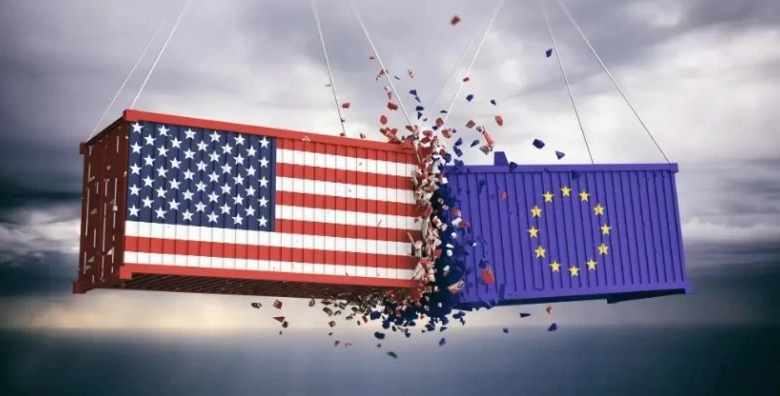
In a new development that raises the specter of a transatlantic trade war, the European Commission announced its firm commitment to the terms of the trade agreement concluded last year with the United States. This announcement came in a strongly worded statement in which Brussels called on the administration of US President Donald Trump to uphold its international obligations, following the legal and political controversy sparked by the US Supreme Court's decision to overturn previous tariffs—a decision that President Trump countered with the imposition of new tariffs.
Clarification of the steps and official position
The European Commission clarified that the ball is now in Washington's court, stressing the need for the US administration to explain the steps it intends to take to comply with the court ruling and avoid further escalation. The Commission emphasized that the current situation, characterized by uncertainty and unilateral decisions, is not conducive to achieving a fair, balanced, and mutually beneficial trade and investment environment—the fundamental objective outlined in the joint statement of the previous agreement.
Brussels indicated that the policy of imposing unexpected and sudden tariffs undermines confidence in global markets and represents a clear reversal of the previously agreed-upon "comprehensive tariff ceiling" as a maximum that cannot be exceeded, thus threatening the stability of economic relations between the world's two largest trading blocs.
General context and historical background of the conflict
To understand the depth of this crisis, it is necessary to consider the historical context of trade relations between the European Union and the United States during the Trump administration. This period was characterized by Washington's adoption of an "America First" policy, which included revising numerous international trade agreements and imposing protectionist tariffs on steel and aluminum imports, much to the chagrin of European allies. The agreement referred to by the Commission was a "trade truce" aimed at eliminating tariffs on non-automotive industrial goods and halting any new punitive measures to allow for negotiations.
The recent US move to impose new tariffs comes as a test of the strength of this truce, as the European side sees these moves as contradicting the spirit of cooperation pledged in the White House's "Rose Garden" and returning relations to square one of tension.
Expected economic impacts: locally and globally
The repercussions of this dispute are not limited to diplomatic relations, but extend to include wide-ranging economic effects:
- On the international level: Renewed trade tensions are leading to uncertainty in global financial markets, which could cause currency fluctuations and a decline in major stock indices, given that the European Union and the United States together represent about half of the global gross domestic product.
- On the economic front (investment and trade): Imposing reciprocal tariffs threatens global supply chains, raising production costs for companies and increasing prices for end consumers. Vital sectors such as the automotive industry, agriculture, and technology could be the most severely affected if the two sides escalate into a full-blown tariff war.
- The future of the World Trade Organization: This dispute puts additional pressure on the multilateral global trading system, as unilateral actions are seen as a threat to the WTO rules that seek to ensure trade flows smoothly and freely.
In conclusion, all eyes remain on Washington to see how it will react to European demands, and whether the coming days will bring a diplomatic breakthrough or a new escalation that could redraw the map of global economic alliances.