Explosions in Jerusalem and Tel Aviv: Iranian missile barrages ignite the region

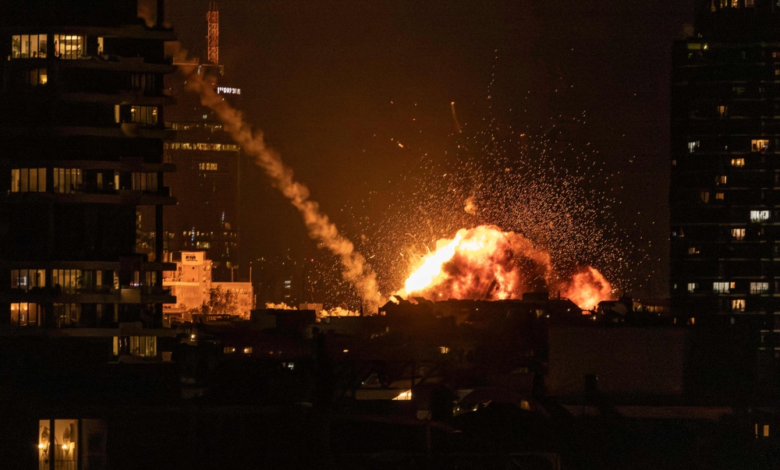
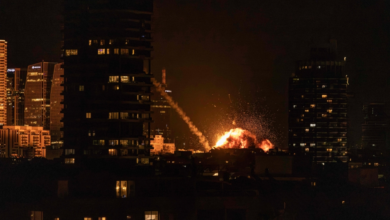
The skies over occupied Jerusalem and areas in central occupied Palestine, as well as the West Bank city of Ramallah, were rocked by a series of loud explosions on Saturday night, creating a tense and volatile atmosphere. These powerful blasts followed the activation of air raid sirens across a wide area, warning of an incoming aerial threat, according to reports from correspondents and eyewitnesses for international news agencies. Journalists in Tel Aviv confirmed hearing the sounds of massive explosions that shook the city.
In the escalating military situation, the Israeli army announced it had detected a new barrage of rockets launched from Iranian territory toward targets within Israel, prompting the activation of air defense systems to intercept them. This escalation coincided with a state of high alert, as interceptor missiles lit up the skies over the region, and debris scattered across several locations, reflecting the intensity of the attack and the heavy firepower employed.
The American role and regional conflict
On the international and strategic level, the United States has entered the fray directly to defend its interests and those of its allies. The US Central Command (CENTCOM) issued an official statement on Saturday confirming the success of its forces stationed in the Middle East in countering intense waves of aerial threats. The command explained that its defenses successfully dealt with hundreds of attacks, including ballistic missiles and Iranian-made drones.
The US statement indicated that the Iranian attacks, despite their intensity, did not result in the death of any American soldiers, emphasizing that the damage to some US sites and bases was very limited and did not affect operational capabilities or the course of military operations in the region. This announcement underscores the depth of military coordination between Washington and Tel Aviv in confronting shared regional threats.
The context of the conflict and its strategic implications
These developments cannot be separated from the tense historical and geopolitical context of the Middle East. This bombing represents a qualitative shift in the rules of engagement between Tehran and Tel Aviv, as the confrontation has moved from a "shadow war" and undeclared intelligence operations, or proxy wars, to direct military confrontation and cross-border missile strikes. This shift portends a radical change in the deterrence equations that have existed for decades, and places the entire region before a host of open-ended scenarios.
These explosions carry serious implications that extend beyond their immediate physical impact; they jeopardize regional security and raise international concerns about the region sliding into a full-blown war that could disrupt global energy supplies and shipping lanes. Furthermore, the missiles and air raid sirens reaching Jerusalem and Tel Aviv carry political and military messages indicating that the Israeli heartland is no longer immune from direct attack, potentially leading to further diplomatic and military escalation in the coming days.