Tehran and Isfahan explosions: Developments on the fourth day of the war on Iran

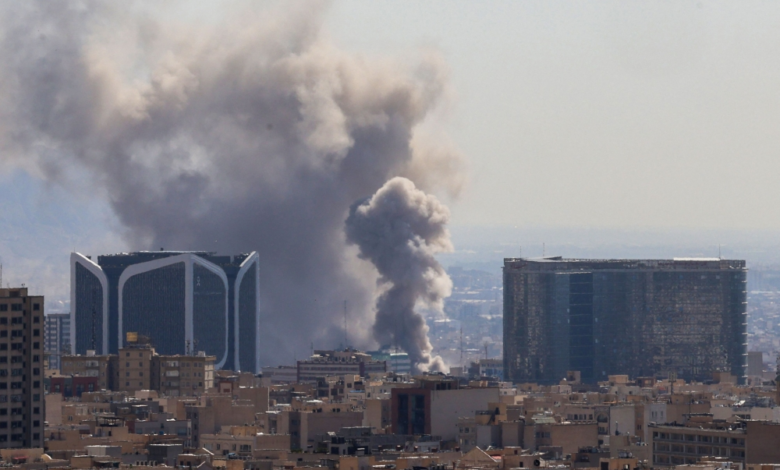
A series of powerful explosions rocked the Iranian capital, Tehran, on Tuesday, marking a dangerous escalation as the war and military confrontations with the United States and Israel entered their fourth day. According to correspondents from international news agencies, including AFP, the explosions were clearly heard in northern Tehran, causing widespread panic and apprehension among residents.
The strikes were not limited to the capital; local Iranian media reported similar explosions in the industrial city of Karaj, near Tehran, as well as in Isfahan, a city in central Iran that houses vital and sensitive military installations. Initial reports indicate that one of the strikes targeted the state broadcaster's headquarters, reflecting a strategy of targeting media and communication centers.
Context of the conflict and historical background
These rapid developments are part of a complex geopolitical landscape in the Middle East, where tensions have escalated to unprecedented levels between Tehran on one side, and Washington and Tel Aviv on the other. Isfahan, the city targeted by the explosions, has long been a focal point in Iran's nuclear and military program, making it a likely strategic target in any open confrontation. This escalation brings to an end years of a "shadow war" waged through cyberattacks and intelligence operations, moving the conflict into a phase of direct and public confrontation.
Strategic importance and expanding the target circle
The targeting of cities like Karaj and Isfahan simultaneously with Tehran indicates a broad target bank that goes beyond mere political deterrence. Karaj is a major industrial center, while Isfahan is the heart of Iran's defense and nuclear industries. Observers believe that the continuation of operations for a fourth day confirms the existence of a systematic military plan aimed at neutralizing Iran's strategic capabilities and simultaneously crippling its military and economic activity.
Expected regional and international impacts
Regionally, these explosions are raising serious concerns among neighboring countries about the potential for the conflict to escalate and spread to the Strait of Hormuz, or to provoke action by Iranian-backed groups in the region, which could threaten the stability of the entire Middle East. Internationally, the continuation of the war for a fourth day is casting a long shadow over global energy markets, as investors fear disruptions to oil supplies, which could lead to price spikes that would further impact a global economy already struggling with inflation.
In the absence of accurate official data on the extent of human or material losses so far, the situation remains open to all possibilities, amid faint international calls for calm that have not yet found an echo in light of the continued explosions.