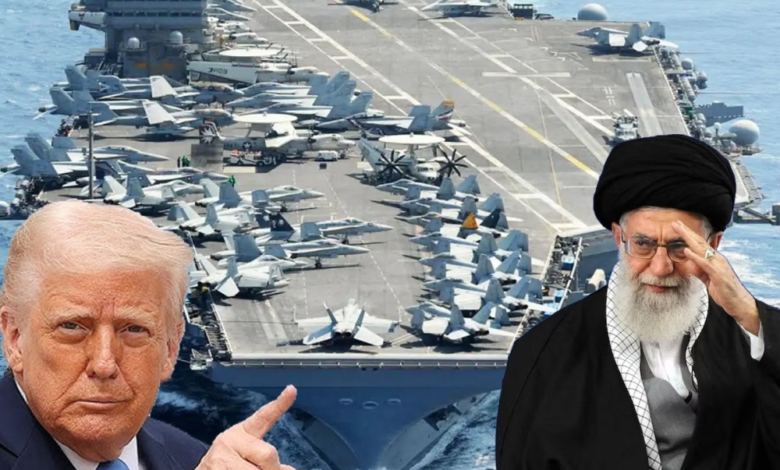
Iran offers to reduce uranium enrichment in exchange for lifting sanctions: Behind the scenes of the Muscat negotiations

In a significant development that could pave the way for calming escalating tensions in the Middle East, Iranian Deputy Foreign Minister Majid Takht-Ravanchi announced his country's readiness to make substantial concessions regarding its nuclear program, specifically its stockpile of highly enriched uranium, as part of a comprehensive deal that would guarantee the lifting of crippling US sanctions on Tehran.
Muscat talks: A new diplomatic window
These significant statements came in the wake of the resumption of a new round of indirect and sensitive talks between Tehran and Washington in the Omani capital, Muscat, which began on February 6. Ravanchi, one of Iran's most prominent diplomats and a member of the negotiating team in Oman, confirmed in an interview with the BBC that the next round of talks would be held on Tuesday, indicating a genuine Iranian desire to reach a diplomatic solution.
The Iranian official explained that Tehran is open to discussing mechanisms for dealing with its nuclear stockpile, provided there is "sincerity" on the American side, saying: "If the United States is sincere, I am sure that we will be on the right path towards reaching an agreement," reflecting a shift in the Iranian tone towards political pragmatism.
The 400-kilogram dilemma and international solutions
The main sticking point in the current negotiations revolves around the fate of more than 400 kilograms of highly enriched uranium possessed by Iran. In this context, Ravanchi did not rule out the option of shipping this stockpile out of the country, a solution that has been implemented previously in similar agreements. He indicated that several countries, including Russia, have offered to host this stockpile to ensure it is not used for military purposes, a proposal that Tehran has not closed the door to. Ravanchi stated that "it is too early to determine exactly what will happen, but all options are on the table.".
Background to the conflict: From the 2015 agreement to the current reality
To understand the significance of this Iranian offer, one must consider the historical context of the crisis. Under the 2015 nuclear agreement (the Joint Comprehensive Plan of Action), Iran was bound by an enrichment level not exceeding 3.67%. However, following the United States' withdrawal from the agreement in 2018 and the reimposition of sanctions, Tehran began gradually abandoning its commitments, with the enrichment level currently reaching 60%, a level very close to that required for nuclear weapons (90%), raising concerns within the international community and the International Atomic Energy Agency.
This event is of paramount regional and international importance, as reaching a new agreement would avert the specter of a devastating war in the region and restore the flow of Iranian oil to global markets, potentially contributing to energy price stability. Furthermore, the success of these negotiations could halt a potential nuclear arms race in the Middle East.
Red lines: Rejecting "zeroing out enrichment"
Despite Tehran's demonstrated flexibility, the Deputy Foreign Minister drew a clear red line regarding US President Donald Trump's previous demands that Iran completely abandon enrichment. Ravanchi emphasized that "the issue of zero enrichment is no longer relevant, and for Iran, this idea is no longer on the agenda," affirming his country's right to a peaceful nuclear fuel cycle. This suggests that negotiations will be arduous and complex in order to reach a compromise acceptable to both sides.