The US Federal Reserve holds interest rates steady at 3.75% at its first meeting of 2026

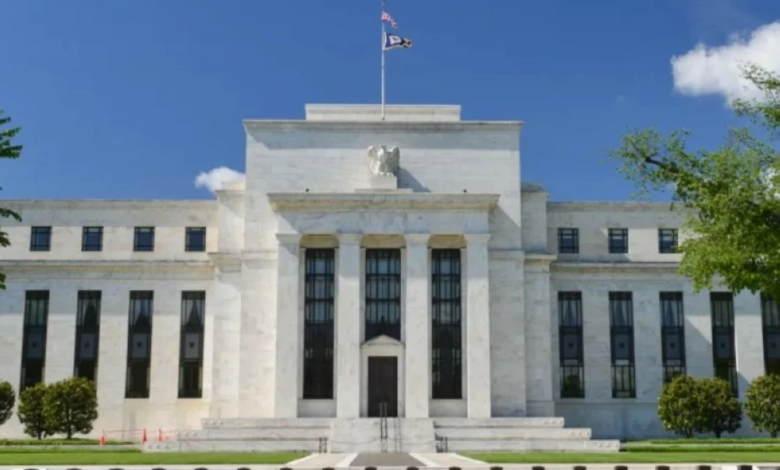
The Federal Reserve (the US central bank) decided to keep the main interest rate unchanged, thus fixing the benchmark overnight interest rate in the range of 3.50-3.75%, during its first meeting of 2026, in a move that reflects a cautious approach to monitoring economic indicators after a series of cuts in the previous year.
Details of the decision and the division in the vote
The US Federal Reserve explained in its official statement that this decision was based on a careful reading of labor market data. The statement noted that "the unemployment rate showed some signs of stabilizing, while job gains remained weak." The minutes of the meeting revealed a divergence of opinion within the Board, with 10 members supporting the decision to hold rates steady, arguing for the need to wait and assess the full economic impact, while two members opposed a 25-basis-point rate cut to support economic growth and avert a potential recession.
Historical context and shift in monetary policy
This decision comes after a year of shifts in US monetary policy, with the Federal Reserve ending 2025 with its third interest rate cut at its last meeting in December. This pause in the easing process suggests the Fed's desire to ensure that inflation remains under control and that the economy is not slowing faster than anticipated. Historically, the Fed has often paused its policy after rate cuts or hikes to gauge the "lag effect" of monetary policy on the real economy.
Expected economic impacts
The decision to maintain interest rates at 3.50-3.75% carries significant implications for both domestic and global markets. Domestically, in the US, this means that current borrowing costs for mortgages, auto loans, and business loans will remain in place for a slightly longer period, potentially curbing consumer and investment spending while simultaneously preventing a resurgence of inflationary pressures.
Internationally, the US Federal Reserve's decisions remain the primary driver of global markets. This decision is expected to lead to relative stability in the US dollar's exchange rate against major currencies. Central banks worldwide, particularly those in countries whose currencies are pegged to the dollar, are closely watching this decision to determine their own monetary policies. Investors in equity and commodity markets (such as gold and oil) are awaiting upcoming economic data that will determine whether the next meeting will see a resumption of rate cuts or a continuation of the current policy.