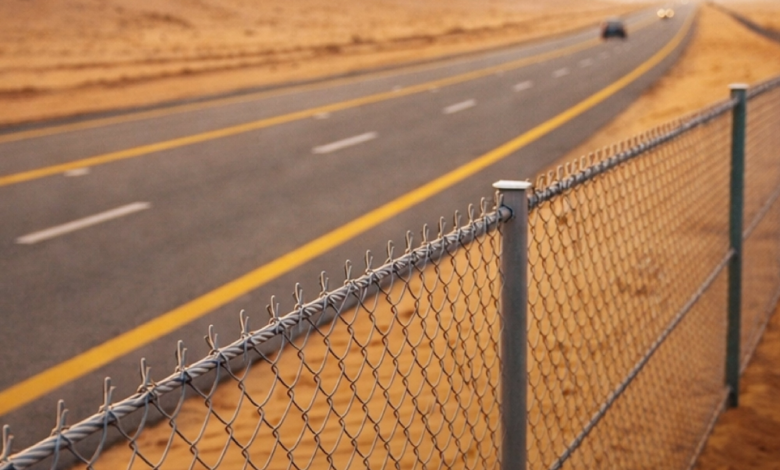

The General Authority for Roads in Saudi Arabia has issued strong warnings about the dangers of tampering with or damaging the fencing along highways in various regions, emphasizing that such practices pose a direct threat to the safety of travelers. This warning comes as part of the Authority's ongoing efforts to improve road safety and reduce traffic accidents, stressing the importance of camel owners and citizens using designated crossings for movement.
Strict penalties: 50,000 riyals and repair of damages
The authority clarified that current regulations criminalize the deliberate cutting or damaging of roadside barriers, with fines reaching up to 50,000 Saudi Riyals . The penalty is not limited to the fine; the perpetrator is also obligated to bear all costs necessary to repair the damage caused to the infrastructure. The authority emphasized that this act transcends being merely an administrative violation, becoming a behavior that exposes the perpetrator to legal accountability due to the potential for fatal accidents resulting from stray animals suddenly entering the roadway.
Historical context: Safety challenges on desert roads
The Kingdom of Saudi Arabia is characterized by its vast geographical area and one of the largest highway networks in the region, which often traverses desert and pastoral regions. Historically, collisions between vehicles and stray animals, particularly camels, have been a major challenge to road safety, causing significant human and material losses over the decades. To address this challenge, the government has invested billions of riyals in highway fencing projects as a fundamental solution to prevent such accidents, making the maintenance of these fencing a national duty and a shared responsibility for protecting national assets.
Designated crossings and social responsibility
In the context of regulating grazing and ensuring smooth traffic flow, the authority indicated that the road network currently includes more than 50 crossings designated for camels, designed according to engineering standards that guarantee the safe passage of animals without affecting traffic. The authority called on camel owners to raise awareness among their employees about the importance of using these crossings and avoiding cutting the fencing, noting that community awareness is the first line of defense against catastrophic accidents.
Strategic impact and objectives of Vision 2030
These stringent measures fall within a broader context related to achieving the goals of the Kingdom's Vision 2030 and the National Transport and Logistics Strategy. The General Authority for Roads aims to position the Kingdom sixth globally in the road quality index, in addition to the ambitious goal of reducing the road fatality rate to less than 5 deaths per 100,000 people. The Authority is working to implement the highest international safety standards (IRAP) to ensure a safe and sustainable infrastructure that keeps pace with the economic and urban development the country is witnessing.
In conclusion, the Authority urged everyone to cooperate and report any violations or observations affecting road safety through the unified call center (938), stressing that traffic safety is a shared responsibility.