In its latest report, Fitch Ratings confirmed that the Gulf Cooperation Council (GCC) countries have a strong financial position supported by huge sovereign assets, providing them with solid financial buffers capable of absorbing shocks resulting from any temporary decline in energy revenues or potential geopolitical tensions in the region.
Geopolitical risks and credit rating
The agency explained that its methodology for rating the region's countries takes into account existing geopolitical risks; this means that current ratings already reflect the sometimes volatile reality of the region. Fitch noted that these countries possess additional fiscal buffers that enable them to deal flexibly with short-term shocks, emphasizing that the sovereign ratings of the GCC countries are capable of withstanding a limited regional conflict, provided it does not escalate into widespread and prolonged damage to critical infrastructure.
Strait of Hormuz scenarios and export alternatives
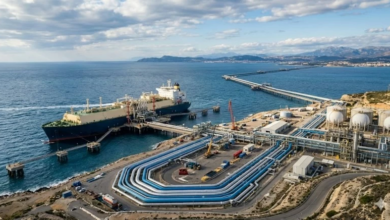
In its analysis of potential scenarios, the agency noted that the baseline scenario assumes any escalation of tensions will last for less than a month, including the possibility of a de facto closure of the Strait of Hormuz, whether due to direct security risks or logistical and insurance difficulties preventing tanker passage. The Strait of Hormuz is a vital artery for the global economy, with more than 20 million barrels of oil and refined products passing through it daily, in addition to massive quantities of liquefied natural gas, making it the most important conduit for Gulf energy exports to global markets, particularly those in Asia.
In the context of strategic solutions, the agency indicated that Saudi Arabia and the United Arab Emirates possess a strategic advantage in the form of onshore pipelines that allow them to divert a significant portion of their oil exports away from the Strait of Hormuz. This infrastructure, namely the East-West pipeline in Saudi Arabia and the Habshan-Fujairah pipeline in the UAE, provides high flexibility in ensuring the continuity of supplies. Furthermore, the exporting countries maintain strategic oil reserves outside the region to guarantee the fulfillment of customer demands during times of crisis.
The impact of oil prices on budgets
From an economic perspective, Fitch Ratings highlighted a crucial equation related to oil prices: any supply disruption or regional tension is expected to lead to an immediate and sharp rise in global crude oil prices. This price increase could partially, and perhaps even fully, offset the negative financial impact of a short-term decline in export volumes, provided that shipments continue to reach markets through alternative routes. This underscores the importance of Gulf sovereign wealth funds, which have accumulated substantial financial surpluses in recent years, acting as a first line of defense to protect national economies and stabilize local currencies against regional volatility.