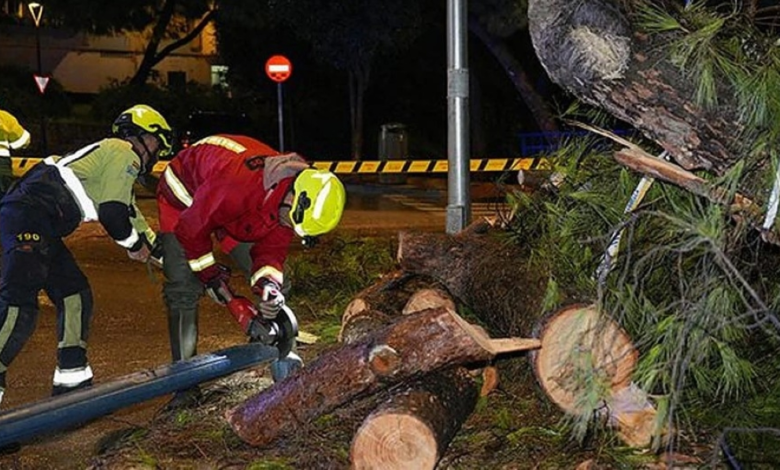
Floods inundate villages in Malaga, prompting a state of alert in southern Spain

The Andalusia region of southern Spain, particularly around the city of Malaga, experienced a wave of severe weather and torrential rain that fell Saturday night and Sunday morning, leading to flash floods that inundated several villages and main roads. These weather events further heighten the state of alert in the country, which is still reeling from the effects of previous natural disasters, amid ongoing warnings about the impacts of climate change on the Iberian Peninsula.
Weather details and emergency response
Videos widely circulated on social media showed floodwaters inundating the narrow streets of villages surrounding Malaga, with water levels rising rapidly and prompting immediate intervention from rescue and civil defense teams. According to local authorities, specialized teams have been working since early morning to pump out water, clear mud, and remove debris left by the floods in order to reopen the roads.
In the context of crisis management, Antonio Sanz Cabello, the regional emergency coordinator for Andalusia, stated via the "X" platform that the heavy rainfall had caused approximately 339 separate incidents across the region, the majority of which were concentrated in Malaga. The official confirmed that despite the extent of the material damage, no deaths or life-threatening injuries had been reported so far, which brought some relief to the residents.
For its part, the Spanish Meteorological Agency (AEMET) updated its warning bulletins, lowering the alert level from red (extreme danger) to orange, while maintaining the emergency level to ensure a rapid response to any sudden developments in the weather.
Spain facing climate change
Spain is one of the European countries most vulnerable to the effects of global warming and climate change. Climate experts indicate that the Mediterranean region is experiencing a significant increase in extreme weather events. After years of record-breaking summer heat waves and prolonged droughts, the country is now facing more frequent bouts of sudden, torrential rains.
Scientists link these phenomena to the rise in greenhouse gas emissions resulting from human activity, which leads to the heating of the atmosphere and increases its ability to retain moisture, which is later released in the form of heavy rains in short periods of time, which is known as the “Dana” phenomenon (isolated low-pressure systems) that has become familiar and worrying at the same time for the inhabitants of southern Spain.
The shadow of the October disaster and the challenges of infrastructure
The current floods in Malaga come at a time when Spain's collective memory is still heavy with the devastating floods of October 2014, which were tragically concentrated in the Valencia region and left more than 230 dead. That disaster was not just an isolated incident; it sparked widespread debate and public outrage about the efficiency of disaster management, and triggered a sharp political dispute between the left-wing central government and right-wing local authorities over the distribution of powers and the speed of response.
The frequent occurrence of these events in close succession places immense pressure on the infrastructure of Spanish cities and villages, particularly in tourist areas like Malaga, the jewel of the Costa del Sol. Authorities face significant challenges in upgrading drainage networks and urban planning to adapt to the new climatic realities, as traditional infrastructure is no longer capable of handling record rainfall.
While the investigation into the Valencia disaster continues, the Spanish public is anxiously watching how the authorities are handling the current Malaga floods, hoping that lessons have been learned to avoid further human and material losses in the future.