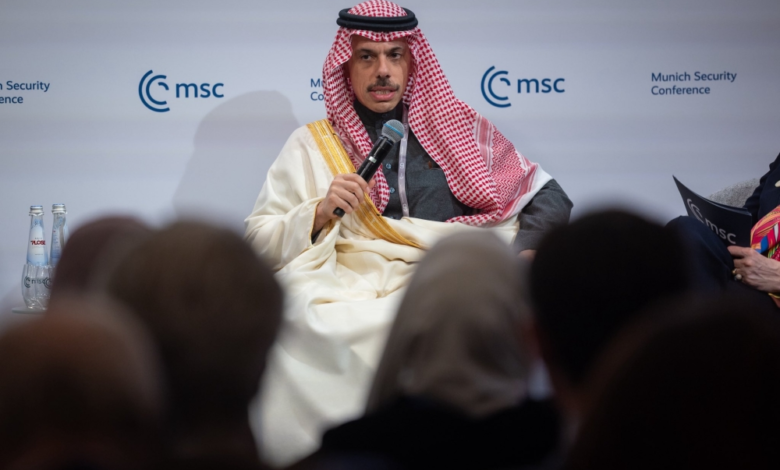

شارك صاحب السمو الأمير فيصل بن فرحان بن عبدالله، وزير الخارجية، يوم السبت، في جلسة نقاشية رفيعة المستوى حول قضايا الشرق الأوسط، وذلك ضمن فعاليات مؤتمر ميونخ للأمن. وجاءت الجلسة تحت عنوان "البناء على الزخم: من الوعود إلى إحراز التقدم"، حيث ركزت على التحديات الراهنة والفرص المتاحة لتعزيز الاستقرار في المنطقة.
وشهدت الجلسة حضوراً دبلوماسياً بارزاً، حيث شارك إلى جانب سمو وزير الخارجية كل من وزير الخارجية والمغتربين بالجمهورية العربية السورية بسام صباغ (أو أسعد حسن الشيباني كما ورد في المصدر)، ووزير خارجية مملكة النرويج إسبن بارث إيدي، بالإضافة إلى كبيرة منسقي الشؤون الإنسانية وإعادة الإعمار في غزة سيغريد كاغ، ونائبة رئيس مؤتمر ميونخ للأمن ورئيسة المعهد الأوروبي للسلام هيلغا شميد.
تطورات الأوضاع في غزة والمنطقة
وتصدرت تطورات المشهد في قطاع غزة جدول أعمال الجلسة، حيث تم استعراض التداعيات الإنسانية والأمنية الخطيرة للحرب الدائرة هناك. وناقش المجتمعون السبل الكفيلة بوقف التصعيد وحماية المدنيين، مع التركيز على ضرورة تكثيف الجهود الدولية لضمان وصول المساعدات الإنسانية بشكل عاجل ومستدام للمتضررين في القطاع، في ظل الظروف المأساوية التي يعيشها السكان.
كما تطرق النقاش بشكل موسع إلى أهمية دفع مسارات التنمية في المنطقة كجزء لا يتجزأ من منظومة الأمن الشامل. وتم التأكيد على أن الحلول العسكرية وحدها لا يمكن أن تحقق الأمن المستدام، بل يجب أن تترافق مع حلول سياسية واقتصادية تضمن مستقبل شعوب المنطقة.
مبادرة حل الدولتين والملف السوري
وفي سياق البحث عن حلول جذرية للصراع، شدد المشاركون على أهمية دعم مبادرة حل الدولتين باعتبارها الركيزة الأساسية لتحقيق السلام العادل والشامل في الشرق الأوسط. وأكدت النقاشات أن الاعتراف بالحقوق المشروعة للشعب الفلسطيني وإقامة دولته المستقلة هو المفتاح لإنهاء دوامة العنف المستمرة منذ عقود.
وعلى صعيد الملف السوري، بحثت الجلسة سبل تعزيز الاستقرارين الأمني والاقتصادي في الجمهورية العربية السورية، وضرورة تهيئة الظروف المناسبة لعودة اللاجئين والبدء في عمليات التعافي المبكر، بما يضمن وحدة سوريا وسلامة أراضيها ويعيد لها دورها في المحيط العربي والإقليمي.
أهمية مؤتمر ميونخ للأمن
ويكتسب مؤتمر ميونخ للأمن أهمية استراتيجية كبرى كونه المنصة الأبرز عالمياً لمناقشة السياسات الأمنية الدولية. ويجمع المؤتمر سنوياً مئات من صناع القرار ورؤساء الدول والوزراء وقادة المنظمات الدولية، لتبادل الرؤى حول التهديدات الأمنية التقليدية وغير التقليدية. وتأتي مشاركة المملكة العربية السعودية الفاعلة في هذا المحفل لتؤكد دورها المحوري والقيادي في صياغة التوجهات السياسية التي تهدف إلى حفظ الأمن والسلم الدوليين، وسعيها الدؤوب لمد جسور الحوار الدبلوماسي لحل الأزمات الإقليمية.
واختتمت الجلسة بالتأكيد على ضرورة تنسيق الجهود الدولية لخفض التصعيد في مختلف بؤر التوتر، والعمل الجاد لتهيئة الظروف للتوصل إلى حلول سياسية مستدامة تضمن الاستقرار السياسي وتعزز التنمية البشرية والاقتصادية لشعوب المنطقة كافة.