
The French parliament begins crucial debates today on an emergency bill aimed at averting a government shutdown, a preemptive move to prevent a paralysis of public institutions similar to that seen in the United States. These rapid developments come just days before the new year, following the collapse of arduous negotiations over the 2026 budget, which has presented the French government with an unprecedented political and economic challenge.
Background to the crisis and political division
The French political scene is experiencing a complex deadlock as a result of the snap legislative elections called by President Emmanuel Macron last year. These elections produced a fragmented parliament in which no single party holds an absolute majority, making the passage of financial legislation a major challenge. Power in the National Assembly is divided among three main, disparate blocs: the centrist bloc (the ruling minority), the left-wing coalition, and the far-right bloc led by Marine Le Pen, making consensus on the budget virtually impossible through traditional means.
Emergency measures to ensure the continuity of the state
Faced with this predicament, President Macron and his government met Monday night to present a draft bill aimed at "ensuring the continuity of national life." This exceptional legislation focuses on allowing the state to continue collecting taxes and disbursing essential funds to local authorities and public services, based on the spending levels approved in the 2025 budget. Without the passage of this law, France risks being unable to collect revenue or pay public sector salaries at the start of the new fiscal year.
Economic repercussions and investor concerns
The risks are not limited to domestic affairs; they extend to France's standing in global financial markets. Through these measures, the French president seeks to reassure investors and international credit rating agencies, particularly as he aims to reduce the massive budget deficit to 5%. Experts warn that continued political uncertainty could lead to higher costs for French public debt and a widening interest rate differential compared to the stable German economy, placing further burdens on the national economy.
Voting scenarios and the near future
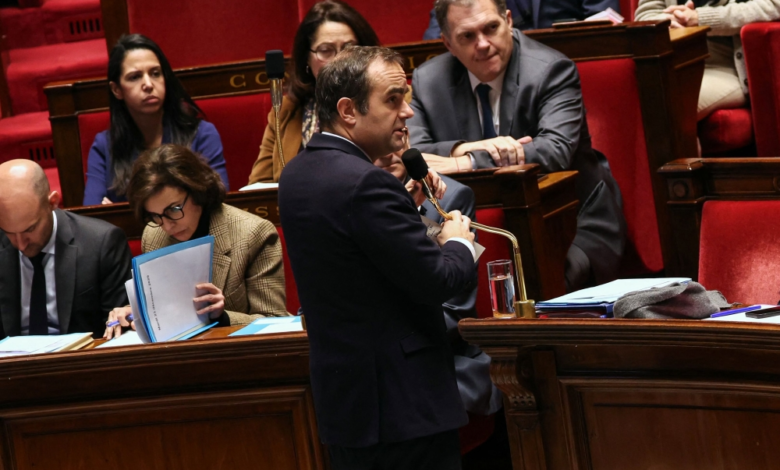
Members of the National Assembly introduced several amendments to the proposed bill, which is expected to be voted on later today before moving to the Senate. Despite deep divisions, observers predict the bill will pass to avoid administrative chaos, but the biggest challenge lies in the next step: building a realistic and sustainable budget for 2026.
In this context, French Finance Minister Roland Lescure told BFM TV, "We need a budget as soon as possible so we can move forward, and the longer the interim budget remains in place, the more it will cost the state." Prime Minister Sébastien Lecornu is expected to deliver a public address later to outline the country's financial roadmap under these exceptional circumstances.