France: Government survives no-confidence vote and moves closer to budget approval

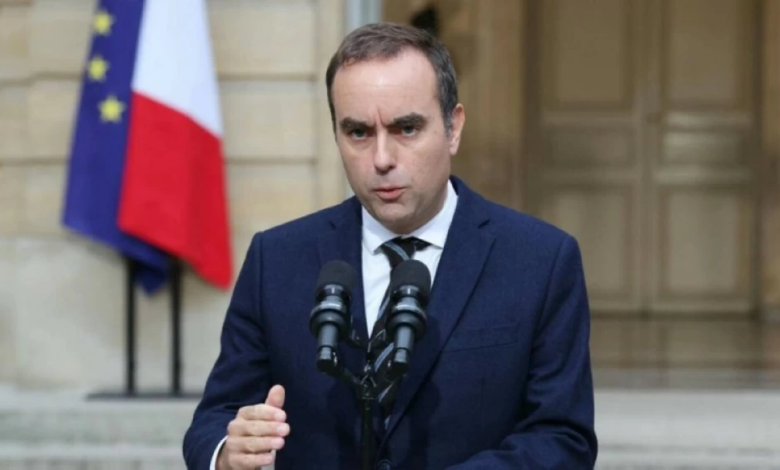
The French minority government, facing complex political challenges, successfully overcame a major hurdle in the National Assembly (parliament), with Prime Minister Sébastien Lecornu's government surviving a no-confidence vote brought by the opposition. This attempt stemmed from sharp divisions and fundamental disagreements over the state budget, reflecting the recent political polarization in France.
The vote resulted in the opposition failing to muster the absolute majority needed to bring down the government. The first no-confidence motion garnered only 267 votes out of 577 members of parliament, while the second received 140 votes. These figures fall short of the constitutional threshold of 289 votes required to reject the spending item in the budget bill and force the prime minister and his government to resign.
The political context and the crisis of the majority
This vote comes at a time when the French political landscape is suffering from the absence of a clear parliamentary majority for any political party, a situation known as "hung parliament." This situation forces successive French governments to resort to constitutional mechanisms to pass the budget without a direct vote, thus opening the door for the opposition to submit motions of no confidence. The government's survival under these circumstances is indicative of the fragmentation of the opposition and its current inability to agree on a unified political alternative.
Economic challenges and deficit projections
This repeated failure of attempts to bring down the government paves the way for France to finalize its budget next month, after the bill returns from the Senate to the National Assembly for its final reading. This budget is of paramount importance given the economic pressures facing Paris, both domestically and within Europe.
In this context, the government revealed worrying economic forecasts, predicting a budget deficit of 5% of GDP this year. This exceeds the government's initial target of 4.7% and is significantly higher than the 3% deficit limit set by the European Union for member states. This increase in the deficit places France under close scrutiny from credit rating agencies and the European Commission, making the passage of the budget a crucial step in attempting to control public spending and restore fiscal balance in the near future.