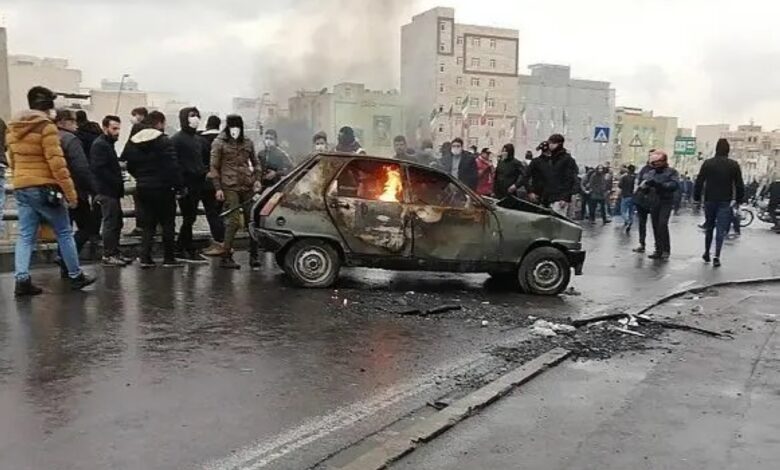

In a clear statement of French foreign policy towards the escalating crisis in the Middle East, Alice Rufo, the French Minister Delegate for the Armed Forces and Director of International and Strategic Relations, confirmed that the option of military intervention in Iran is not on the table for Paris, despite previous threats made by US President Donald Trump.
The French position: diplomacy and support for the people
During her appearance on the joint RTL radio and Le Figaro program "Le Grand Jury," Rufo explained that France's strategy is based on supporting the Iranian people's aspirations for freedom and dignity without being drawn into military adventures that could ignite the region. She stated, "Military intervention is not our preferred option. It is up to the Iranian people alone to decide their own fate and to get rid of the regime if they so wish, and our duty is to stand with them and highlight their suffering.".
This stance is consistent with traditional French policy, which favors diplomatic solutions and fears a repeat of the chaotic scenarios witnessed in other countries in the region following foreign military interventions. Paris believes that change originating from within is the most sustainable and secure path to regional and international security.
Implications of "Al-Bazaar" joining the protests
In her analysis of the nature of the movement, the French official pointed to a crucial aspect: the involvement of the bazaar (traditional market merchants) in the protests. Historically, the bazaar in Iran has been a backbone of the economy and a powerful political force that contributed to the success of the 1979 revolution. Rufo stated, "This is a movement that began with economic concerns and the cost of living, but it has grown significantly to take on political dimensions, demanding regime change.".
Media blackout and the war of numbers
Paris expressed deep concern over the difficulty of documenting violations due to the unprecedented internet blackout imposed by Iranian authorities for more than two weeks. According to human rights organizations, this digital blackout aims to conceal the scale of the bloody repression suffered by protesters.
Amid this blackout, figures regarding the number of victims varied greatly, reflecting the scale of the tragedy:
- The official narrative: Iranian authorities announced a death toll of 3,117, claiming that the majority (2,427) were security forces or passersby, describing the protesters as "rioters".
- HRANA News Agency: The US-based Human Rights Activists News Agency reported that it had documented the killing of 5,002 people, including 4,714 protesters, with investigations underway into thousands of other possible cases.
- Human Rights in Iran, based in Norway, confirmed the killing of 3,428 protesters, expressing concerns that the true number could reach catastrophic levels of 25,000.
Between the American threat and reality
Internationally, American statements have been a fluctuating factor in the crisis. While President Trump repeatedly threatened military strikes in response to the crackdown on protests, he recently appeared to back away from this option, suggesting that international pressure had led Tehran to halt some executions. This shift reinforces the European and French view that political and economic pressure, coupled with media and human rights support for the popular movement, may be the most effective course of action at present, rather than direct military confrontation.