France seizes Russian oil tanker: A blow to the shadow fleet in the Mediterranean

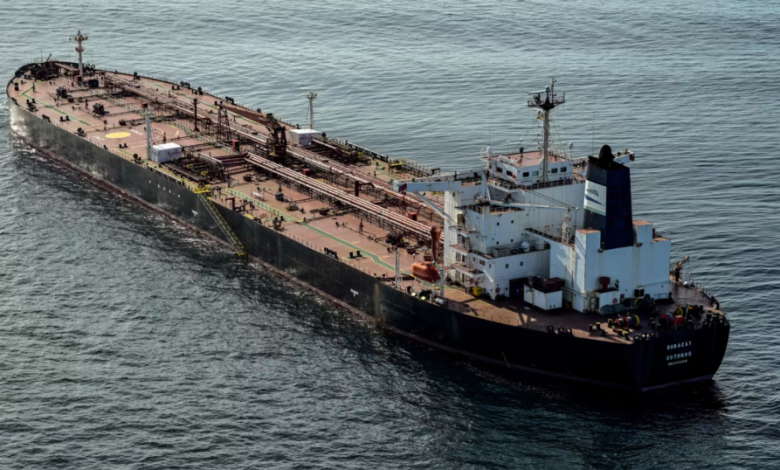
In a significant development in the Mediterranean, French President Emmanuel Macron announced that French naval forces had successfully intercepted and seized an oil tanker suspected of belonging to what is known as the “shadow fleet” used by Russia to finance its military operations in Ukraine.
In an official statement published on his X platform, Macron explained that the operation was carried out with close coordination and assistance from several international allies. He noted that the tanker was subject to international sanctions and strongly suspected of flying a false flag as a cover. The French president confirmed that the ship was immediately diverted and a comprehensive judicial investigation was launched to determine the circumstances of its activities and the parties behind it.
What is the Russian “shadow fleet”?
This incident has once again brought to light the phenomenon of the “shadow fleet,” a term used to describe the hundreds of aging ships and oil tankers that Moscow has amassed to circumvent Western sanctions. These vessels are primarily intended to transport and sell Russian oil at prices exceeding the $60 per barrel price cap set by the G7, the European Union, and Australia. They typically resort to disabling their automatic identification systems (AIS) and frequently changing their flags and names to avoid detection.
The context of international sanctions and economic warfare
This French operation is part of a broader economic war between the West and Russia that has been raging since the outbreak of war in Ukraine in February 2022. The European Union and its allies are seeking to cut off the Kremlin's funding by restricting energy exports, which are the lifeblood of the Russian economy. The interception of this tanker sends a clear political and military message that the Mediterranean, a vital artery for global trade, is under strict surveillance to ensure the enforcement of sanctions.
Environmental and security risks
Beyond the political and economic dimensions, the “shadow fleet” raises serious environmental concerns for countries bordering seas and waterways. The majority of these vessels are dilapidated and do not meet stringent international safety standards, and they typically lack reliable insurance coverage from global protection and indemnity (P&I) clubs. This means that any oil spill or collision could cause a massive environmental disaster with financial and logistical repercussions that would be difficult to manage, making the interception of these vessels a security and environmental imperative as much as a punitive measure.
This incident is expected to increase diplomatic tensions between Paris and Moscow, and may prompt Russia to seek alternative sea routes or devise new methods of camouflage, while this move may encourage other European countries to take similar measures against suspicious vessels in their territorial waters.