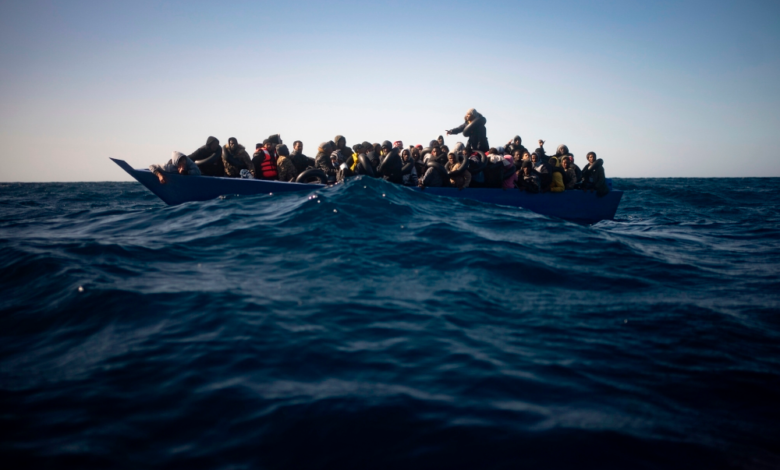

A new humanitarian tragedy has struck the coast of West Africa, with at least seven people killed and dozens missing at sea after a fishing boat packed with irregular migrants sank off the coast of the Republic of Gambia, in an incident that once again highlights the dangers of the deadly "Atlantic route" to Europe.
Details of the incident and rescue operations
The Gambian government released an official statement yesterday, Thursday, detailing the horrific incident. The statement explained that the ill-fated vessel was carrying more than 200 migrants and sank near the village of Ginak in the North Bank region. Authorities indicated that search and rescue teams managed to recover at least 96 people, many of whom were taken to medical centers for treatment due to serious injuries and severe exhaustion from being in the water for an extended period.
Upon receiving the distress call, the Gambian Navy launched a large-scale operation involving several warships and coast guard patrols to search the area for possible survivors, amid fears that the death toll could rise given the large number of missing persons compared to those who were rescued.
The Atlantic route: a perilous journey
This incident comes amid a rise in irregular migration attempts across the Atlantic Ocean, with migrants typically setting off from the coasts of Gambia, Senegal, and Mauritania, aiming for the Spanish Canary Islands as a gateway to the European Union. This sea route is classified by international organizations, including the International Organization for Migration (IOM), as one of the most dangerous migration routes in the world, due to the long distances traveled by migrants in simple wooden fishing boats (known locally as "pirouj") ill-equipped for open ocean navigation and often lacking basic safety and navigation equipment.
Motives and regional repercussions
The Gambia, the smallest country on the African mainland, is a major departure point for young migrants fleeing dire economic conditions and high unemployment. These circumstances drive thousands each year to risk their lives and pay exorbitant sums to smugglers for a perilous journey.
The recurrence of these incidents is putting increasing pressure on local governments in West Africa to strengthen maritime border controls and combat human trafficking networks. It also renews international calls for the need to find radical solutions to the economic crises that drive young people to migrate, as well as to promote legal migration pathways to reduce reliance on death boats.
Gambian authorities are continuing their investigations to determine the circumstances of the incident and identify those responsible for organizing the trip, while the families of the missing are still waiting for any news about their loved ones, as hopes of finding more survivors diminish with time.