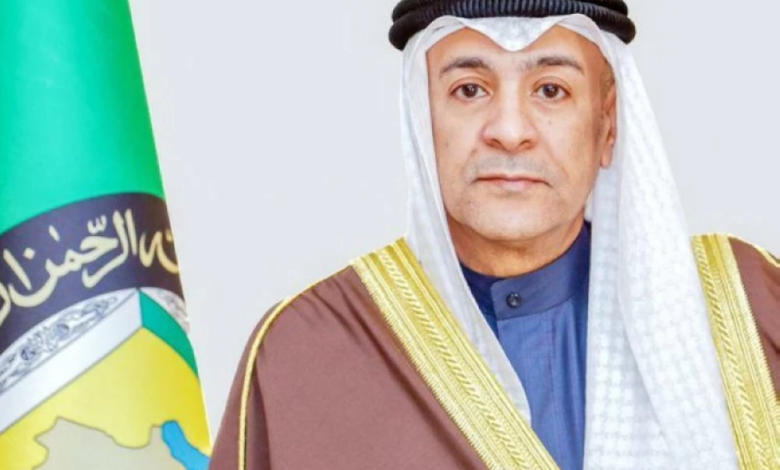

The Secretary-General of the Gulf Cooperation Council (GCC), Jassem Al-Budaiwi, affirmed that economic relations between the Gulf states and the European Union are undergoing a radical strategic transformation, moving beyond traditional trade exchanges towards building long-term, shared value chains. This significant statement was made during a dialogue session held today entitled "The Next Investment and Trade Race," which brought him together with the EU Special Representative for Foreign Affairs, Luigi Di Maio.
The roots of the partnership and its historical development
To understand the depth of this transformation, Al-Badawi explained that the relationship between the two sides is not a product of the moment, but rather a well-established partnership based on a long legacy of institutional cooperation that officially began with the signing of the Framework Cooperation Agreement in 1988. This agreement was not merely a diplomatic document, but rather formed the cornerstone that established a solid framework for political and economic dialogue, which opened wide the doors to cooperation in vital sectors including trade, energy, development, and education, and laid the foundations for a solid base of mutual understanding.
A qualitative leap and record numbers
In reviewing current achievements, the Secretary-General noted that the Gulf-European partnership has witnessed significant progress in recent years, culminating in the adoption of the Joint Action Plan for the period 2022–2027 and the holding of the historic Gulf-European Summit in Brussels. This convergence is clearly reflected in the figures, with the volume of trade in goods between the two sides reaching approximately $197 billion, placing the European Union among the most important trading partners for the GCC countries. He also highlighted the growth of European direct investment in the Gulf, a strong indicator of increasing confidence in the legislative and economic environment of the GCC countries.
Future prospects: The green and digital economy
Regarding the vision for the future, Al-Budaiwi emphasized that the major economic transformations underway in the Gulf countries, driven by their ambitious national visions (such as Saudi Vision 2030 and others), perfectly align with European priorities. He affirmed that this convergence opens up vast avenues for partnership, particularly in future-oriented sectors such as clean energy, green hydrogen production, digital transformation, artificial intelligence, and cybersecurity. These areas represent the new backbone of the global economy and offer tremendous opportunities for shared growth.
Towards an integrated economic model
Al-Badawi concluded his remarks with a comprehensive strategic vision, emphasizing that the success of this partnership is not measured solely by the volume of financial flows, but rather by its ability to evolve into an integrated model of cooperation based on trust and risk-sharing. This model aims to build a shared economic future that strengthens the resilience of global supply chains and actively contributes to enhancing stability and sustainable growth in the global economy, thus positioning the two blocs as a key stabilizing force in the face of international economic challenges.