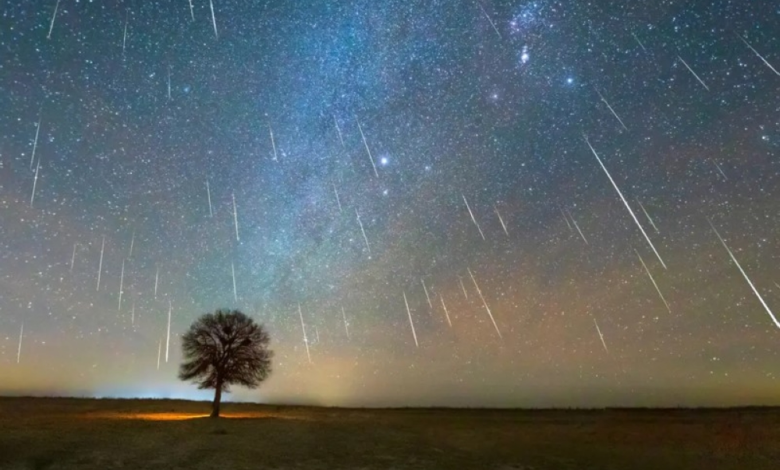
The Geminid meteor shower peak in Saudi Arabia in 2025: Date and observation methods

The skies of Saudi Arabia and the Arab region are preparing to welcome one of the most prominent annual astronomical events, as tomorrow evening will witness the peak of the Geminid meteor shower for the year 2025. This enchanting celestial display extends through the late night hours, reaching its peak just before sunrise on Sunday, December 14, promising observers a unique astronomical experience despite the natural challenges.
Details of the peak of the Twins and observation forecasts
Engineer Majed Abu Zahra, head of the Jeddah Astronomical Society, stated that 2025 might present a minor challenge for observers due to the late-night presence of the moon, which could obscure some fainter meteors with its light. However, Abu Zahra emphasized that the Geminid meteor shower's intensity and brightness make it a promising and enjoyable display, often referred to as the "queen of meteor showers" due to its prolific output and sometimes vibrant colors.
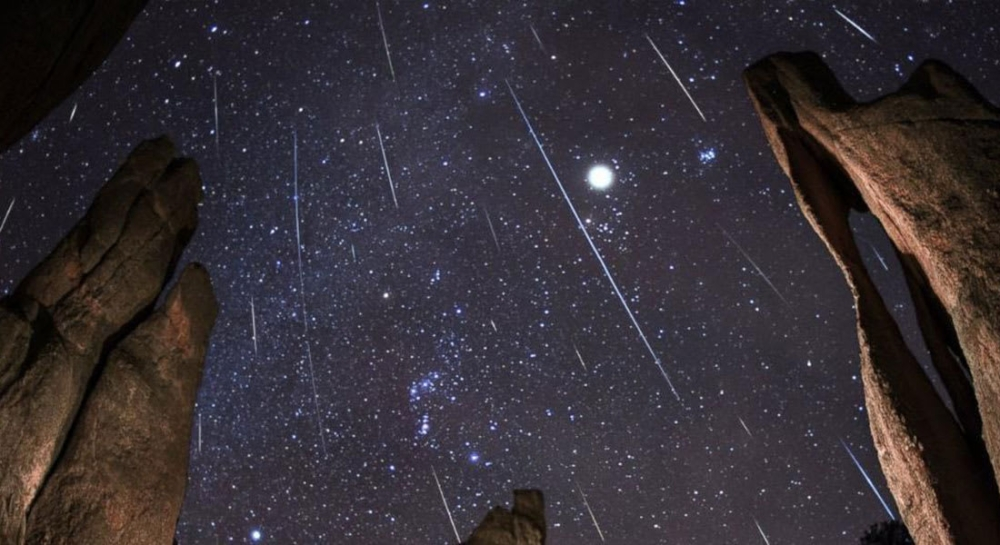
Astronomical phenomenon: Asteroid, not a comet
What distinguishes the Geminid meteor shower from other famous meteor showers like the Perseids is its unique origin. While most meteor showers are caused by the debris of icy comets, the Geminids originate from the debris of the rocky asteroid 3200 Phaethon. This celestial body is classified as a "rocky comet" because its orbit brings it extremely close to the Sun, reaching a distance of about 21 million kilometers. This causes its rocky surface to heat up and fracture, releasing enormous quantities of dust and pebbles into space, which burn up upon entering Earth's atmosphere, creating this spectacular light show.
Best monitoring methods and times
For the best viewing experience, experts recommend escaping city light pollution and heading to dark or desert areas. The ideal time for observing is after midnight until the early hours of dawn. Observers don't need telescopes or special equipment; the naked eye is the best tool for viewing the vast expanse of the sky. It's advisable to look towards the northeastern horizon, where the radiant point appears to be near the stars Castor and Pollux in the constellation Gemini. However, meteors can appear anywhere in the sky.
Historical facts and the importance of the event
Historically, the Geminid meteor shower is a relatively recent phenomenon, having been first discovered in 1862. Interestingly, the intensity of these meteors increases year after year; in the 19th century, the rate was only 10 to 20 meteors per hour, while in our time, under ideal conditions (no moon and minimal light pollution), it can reach up to 120 meteors per hour. These meteors are relatively slow-moving compared to others, making them easier to observe and photograph. They also appear in various colors, such as white, yellow, and sometimes green or blue, giving them a unique beauty that attracts astronomy enthusiasts and photographers worldwide.