The Saudi national team's crisis with Renard: Technical confusion and fan anger

Introduction: The decline in the green level raises questions
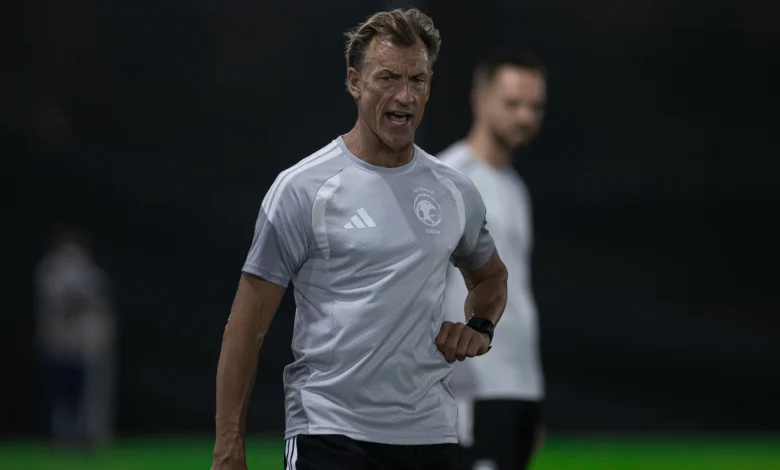
When discussing the international break and its impact on the Saudi national football team, it's clear that the results of all the international friendlies appear "futile" and "technically unhelpful." The primary reason for this lies in what many describe as the "inconsistent" tactics employed by French coach Hervé Renard during these matches, coupled with the blatant contradictions in his media statements during press conferences.
Historical context: From the Lusail Summit to the crisis of confidence
The historic mark left by Hervé Renard during his first stint with the Saudi national team is undeniable, particularly the stunning victory over Argentina in the 2022 World Cup qualifiers in Qatar. However, the French coach's current return has fallen short of expectations. Renard, who seems to have been erratic in his tactical approach for some time, is proving, in the eyes of critics, that he may be the wrong man to lead the Saudi national team during the 2026 World Cup qualifiers. This criticism stems from the unsatisfactory results in both official tournaments and friendly matches for the Saudi sports community, a large segment of which now believes that dismissing him is the best option to get the team back on track and restore its lost identity.
Contradictory statements and a crisis of playing time
Coach Renard's contradictory statements about the Saudi national team players and their lack of playing time with their clubs in domestic competitions reveal a clear inconsistency. Statistics prove that he and his coaching staff are completely unaware of the players' actual playing time. This demonstrates to the sporting public that his assistants are merely there for show, in the stands, to "look at us, we're attentive and engaged," without providing accurate technical reports that reflect reality.
Statistics reveal the facts: Minutes played by the national team stars
To fully clarify the picture and refute claims of player absence, we review the actual playing minutes of the most prominent available players:
1- The players with the most appearances:
- Ali Majrashi: Played 2671 minutes.
- Mohamed Mahzari: Played 2434 minutes.
- Mohammed Al-Owais: Played 2340 minutes.
- Mohammed Kanno: Played 2176 minutes.
- Musab Al-Juwair: Played 2069 minutes.
2- Players who have surpassed the 1000-minute mark:
- Mut'eb Al-Mufarraj
- Firas Al-Buraikan
- Mohammed Al-Mujahid
- Abdullah Al-Khaibri
- Abdulaziz Al-Aliwa
- Abdul-Ilah Al-Omari
- Khalifa Al-Dosari
- Ziyad Al-Juhani
- Khaled Al-Ghannam
3- Players with less than 1000 minutes:
- Saleh Al-Shehri
- Salman Al-Faraj
- Ahmed Al-Kassar
- Abdullah Al-Hamdan
- Mohammed Al-Rubaie
Expected impact on the future of the national team
The continued gap between the coaching staff and the players' actual performance poses a real threat to the Saudi national team's regional and international trajectory. Reaching the 2026 World Cup and competing strongly in continental tournaments requires technical stability and a clear vision based on data and rigorous analysis, not just fleeting impressions. The current phase must be carefully assessed to ensure the Green Falcons return to their rightful place as one of the strongest teams in Asia and to avoid any setbacks that could cost Saudi football dearly in the near future.