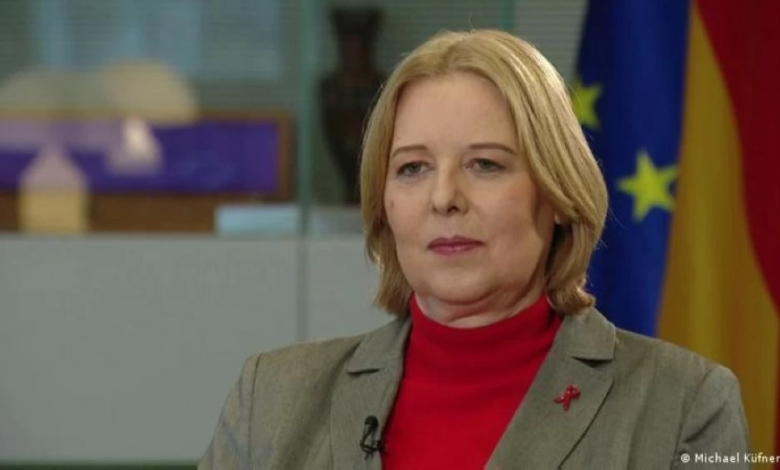

Germany, Europe's largest economy, faces a growing existential challenge in the form of a severe shortage of skilled workers, prompting senior officials to issue serious warnings about the country's economic future. In this context, Bärbel Bass , a prominent Social Democratic Party politician, urgently called for intensified efforts to attract skilled workers from abroad to rescue and support the German economy, which is threatened by recession.
The need for new blood in the economic arteries
During her participation in the "Migration and Employment" conference held in Berlin, Bass explained that the German economy needs not only academics, but also "people who develop new ideas, operate cranes, or work on production lines." She pointed out that skilled labor has become a scarce commodity in many vital sectors and industrial areas, emphasizing the stark reality that "even if all the potential of local talent were harnessed and trained, it would not be enough to bridge the enormous gap.".
Demographic context: The roots of the crisis
To understand the depth of this crisis, one must consider Germany's demographic background. For decades, the country has suffered from declining birth rates and an aging population. As the baby boomer generation—those born after World War II—reaches retirement, the labor market loses hundreds of thousands of workers annually without a sufficient younger generation to replace them. Economic estimates suggest that Germany needs net immigration of approximately 400,000 people per year to maintain a stable workforce, a substantial figure that necessitates flexible and attractive immigration policies.
fierce international competition
Bass emphasized the need to pave the way early and with less bureaucratic red tape for recruiting specialists from non-EU countries. She added that Germany is not alone in this endeavor, but faces fierce international competition from other major industrialized nations with similar demographic challenges, such as Canada, Japan, and the United States, making the race to attract talent and skilled labor even more difficult.
The paradox of unemployment and labor shortages
In response to criticisms pointing to domestic unemployment, Bass stated that she saw no contradiction between attracting foreign workers and the existence of nearly three million unemployed people within the country. She explained this by citing a skills gap and geographical distribution, stating clearly: "An unemployed welder in Kiel simply cannot replace a nurse in Constance." This statement highlights what is known as "structural unemployment," where the skills of the unemployed do not match the available job vacancies.
Expected economic impact
The continuation of this crisis without radical solutions threatens Germany's position as the engine of the European economy. The shortage is not limited to manual labor; it extends to the technology, healthcare, and engineering sectors. This deficit could lead to a slowdown in innovation, a decline in industrial production, and an exodus of investment to countries with readily available workforces, making immigration and employment one of the most important strategic issues for the German government in the coming years.