Poll: Widespread German support for imposing "Made in Europe" industrial rules

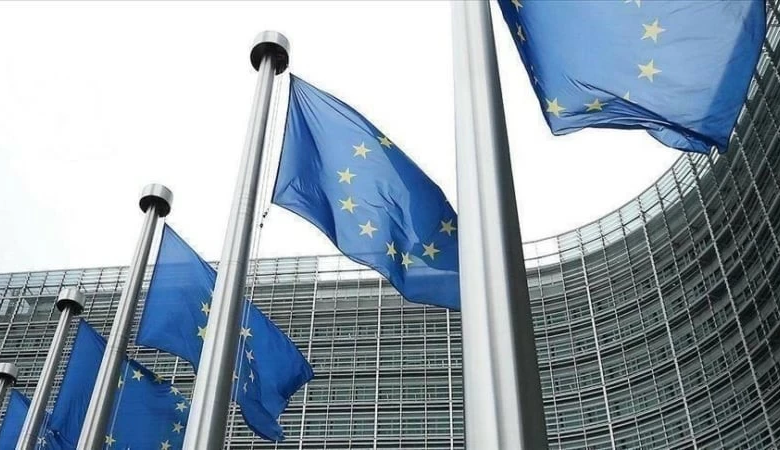
A recent opinion poll has revealed a notable shift in the German public mood towards economic policies, with an overwhelming majority supporting the imposition of strict European rules on industrial production, in a move that reflects growing concerns about the future of industry in the Old Continent.
Survey results: Broad support for localizing industry
In a survey commissioned by IG Metall, the largest union representing workers in the metal and industrial production sectors in Europe, 70% of respondents agreed that companies selling their products in the European market should be required to localize a portion of their production within the European Union. These findings come at a time when European industry is facing unprecedented existential challenges.
A tense global context: between Chinese competition and American support
These results cannot be interpreted in isolation from the current global economic context. Europe is experiencing growing anxiety due to fierce competition from China, which is heavily subsidizing its industries, and the United States, which has enacted the Inflation Reduction Act (IRA) to attract industrial investment through massive tax incentives. This reality has led German citizens, who have long been supporters of free trade, to lean towards protectionist policies to ensure the continued strength of the industrial base upon which the German economy depends.
The Industrial Accelerator Act and the Political Controversy
These popular demands coincide with official moves in Brussels, where a draft of the so-called "Industrial Accelerator Act," which the European Commission intends to present soon, includes rules aligned with these trends. According to the German Press Agency (dpa), this law aims to accelerate the pace of industrialization within the bloc.
However, political disagreements have not been without their challenges. Clear differences have emerged regarding the stringency of these regulations. In this context, Friedrich Merz (leader of the opposition and head of the Christian Democratic Union) criticized sweeping French proposals aimed at enforcing the "Made in Europe" principle, which would grant European service providers preferential treatment in public investments. Merz argued that such protectionist rules should be limited to vital and strategic sectors only, and used only as a last resort to avoid triggering trade wars.
Strict conditions for government support
The survey revealed a high level of awareness among the German public regarding financial support mechanisms, with 90% of respondents supporting the idea that the state should only provide support to companies that guarantee that production and jobs remain within Europe. Furthermore, 83% believed that public contracts and government tenders should be awarded exclusively to companies that guarantee secure and sustainable jobs within the European Union.
Protecting taxpayers' money
Commenting on these results, Jürgen Kerner, second president of the IG Metall union, said: “When politics spends taxpayers’ money, it should strengthen Europe’s industrial position and secure jobs here.” Kerner further explained the strategic importance of this approach, noting that domestic production is the logical and necessary response to a world increasingly defined by tariffs, government subsidies, and unfair trade practices—practices that are eroding Europe’s industrial base and causing job losses every day.
Expected impact
These results are expected to increase pressure on the German government and the European Commission to adopt more assertive policies in the face of trade dumping, which could redraw the map of global supply chains and reinforce the concept of European “strategic independence” in the energy, technology and heavy industries sectors.