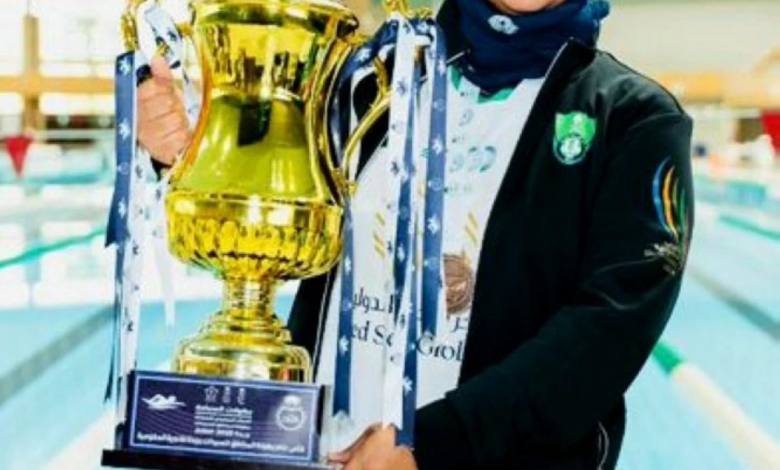

Amid the major transformations taking place in Saudi Arabia as part of its Vision 2030, the sports and entertainment sector has emerged as a key pillar of quality of life, with women's sports in particular witnessing unprecedented leaps forward. In this context, marine rescuer and international trainer Ghaniya Al-Shaikhi affirmed that the future of women's training in the Kingdom, especially in the fields of rescue and water safety, is poised for significant growth, supported by government empowerment and increasing societal demand.
Empowering women in the water sports sector
Al-Shaikhi's interview with Okaz newspaper aligns with the current sporting movement in the Kingdom. After years of limited women's sports participation, the Vision has opened wide the doors for national talent to participate in international events and assume coaching and refereeing roles. Ghaniya Al-Shaikhi is a prime example of this empowerment. She is not merely a coach, but a prominent national figure with international qualifications including rescue training, international refereeing, a diploma in the fundamentals of maritime navigation, and accreditations from the Technical and Vocational Training Corporation and the American-Canadian Board.
A promising future and field challenges
Al-Shaikhi explained that the field is no longer just entertainment, but has transformed into a professional industry requiring qualified personnel. She noted that public trust in Saudi female instructors has increased significantly, with families and schools now seeking specialized female instructors not only to teach swimming, but also to provide courses in first aid and advanced marine rescue. Despite this optimism, Al-Shaikhi pointed to challenges facing lifeguards, most notably the lack of awareness of "water safety culture" among some beachgoers and the disregard for safety rules, which places a psychological and physical burden on rescue teams.
The strategic importance of maritime safety
The marine rescue profession is currently gaining paramount strategic importance, coinciding with the Kingdom's launch of mega tourism projects on the Red Sea and Arabian Gulf coasts, such as the Red Sea Project, NEOM, and AMAALA. These projects, which aim to attract millions of tourists annually, necessitate a robust maritime safety infrastructure and a national workforce trained to the highest international standards for emergency response—a role fulfilled by professionals like Ghaniya Al-Shaikhi in collaboration with the Saudi Lifesaving Federation.
Real rescue stories and golden tips
During her talk, Al-Shaikhi recounted several moving humanitarian incidents, including rescuing a woman from drowning in a deep pool and treating bone injuries such as a dislocated shoulder on the beach. She emphasized that her true motivation for continuing her work stems from the noble feeling of saving lives. She concluded by offering essential advice to beachgoers, stressing the importance of not swimming alone, learning how to navigate rip currents by swimming parallel to the shore rather than fighting the current, and the necessity for everyone to learn basic CPR so they can be the first line of defense in emergencies.