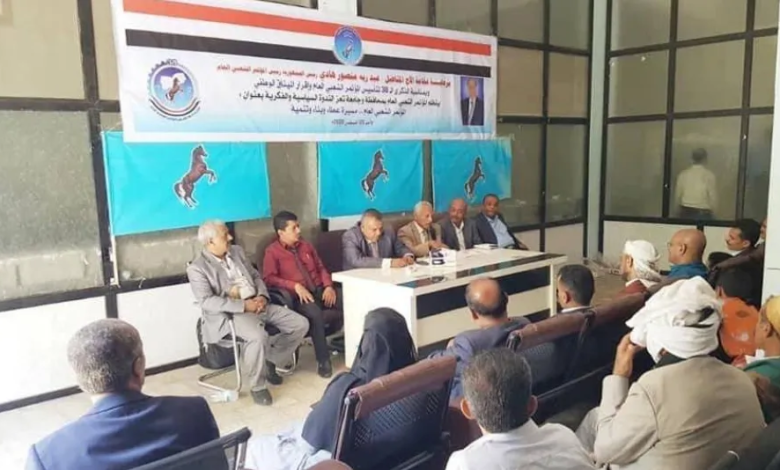

Local sources in the Yemeni capital, Sana'a, reported that the Houthi group (Ansar Allah) released Ghazi Al-Ahwal, a leader in the General People's Congress party and former deputy mayor of the capital, after a period of detention that lasted for several months in the group's prisons.
The release of Ghazi al-Ahwal came after intensive tribal efforts and mediation led by prominent figures and sheikhs, which culminated in the successful release of the former local official from detention. Al-Ahwal had been arbitrarily arrested and taken to an unknown location, during which time his family and loved ones had no contact with him, raising widespread concern about his health and the conditions of his detention.
Background of the arrest and the political context
The arrest of Ghazi Al-Ahwal is not an isolated incident, but rather comes in the context of a broad and ongoing campaign waged by the Houthi group against the leaders and cadres of the General People's Congress Party, and those loyal to the late President Ali Abdullah Saleh, since the events of December 2017. The capital, Sana'a, and the areas under the group's control have witnessed a series of security crackdowns targeting dozens of former officials and political activists, with the aim of curtailing the party's role and tightening the security grip on state institutions.
Ghazi al-Ahwal holds a prominent social and political position, having served for years as Deputy Mayor of Sana'a and played a significant role in the city's administrative and service sectors. Observers believe that targeting figures of this stature reflects the group's desire to remove previous administrative personnel and replace them with loyalists, as part of what is known as the "Houthification" of state institutions.
The detainees file and tribal mediations
The release of al-Ahwal from detention has reopened the discussion about the issue of detainees and those forcibly disappeared in Yemeni prisons, a matter that deeply troubles thousands of families. Tribal mediation in Yemen plays a pivotal role in resolving such complex issues, often proving more effective than formal political negotiations in securing the release of specific individuals.
Despite the success of this individual mediation, international and local human rights organizations continue to demand the comprehensive release of all political detainees and prisoners of conscience, warning of the health and psychological risks to which detainees are exposed under detention conditions that lack the minimum humanitarian and legal standards.
Human and human rights dimensions
The return of Ghazi al-Ahwal to his family is of immense humanitarian significance, as his family endured considerable psychological and social hardship during his absence. The Yemeni public hopes this step will pave the way for resolving the cases of other detainees and ending the security tensions plaguing the capital, Sana'a, thus contributing to creating a conducive environment for any future comprehensive political settlement that will end the ongoing conflict in the country.