
Introduction: Markets hold their breath
Global energy and financial markets are experiencing heightened anticipation and unprecedented caution, with all eyes on what economists have dubbed a potential "Black Monday." This heightened tension comes as the conflict enters its fourth week and the war of words between the US administration and Tehran escalates. While US President Donald Trump has threatened to escalate military operations, Iran has affirmed its determination to continue targeting vital energy and fuel facilities in the Arabian Gulf region, a move that portends continued instability and a deepening of the economic and geopolitical crisis in the Middle East.
Historical context and strategic importance of the Strait of Hormuz
To understand the scale of the potential economic catastrophe, one must consider the geopolitical importance of the Gulf region and the Strait of Hormuz. Historically, the Strait of Hormuz has been the most vital artery of the global economy, with roughly one-fifth of the world's oil supply passing through it, along with enormous quantities of liquefied natural gas. Since the "Tanker War" of the 1980s, markets have learned that any threat to navigation in this narrow waterway would mean an immediate paralysis of supply chains. Current threats to close the Strait are reminiscent of the major oil crises of the 1970s and present the global economy with a severe test that could lead to widespread stagflation.
Details of the latest escalation and the American warning
In a dangerous escalation, President Trump threatened to destroy Iranian power plants and infrastructure if Tehran did not fully reopen the Strait of Hormuz within 48 hours. This stark warning came just one day after his remarks about "ending" the war. Financial market analyst Tony Sycamore cautioned about the gravity of the situation, stating, "President Trump's 48-hour ultimatum has only heightened the uncertainty in the markets. If this ultimatum is not retracted, we are likely to see a freefall in global stock markets when they open on Black Monday, and a sharp rise in oil prices.".
Sycamore noted that the strategy of targeting Iranian infrastructure aims to make closing the Strait of Hormuz costly and economically and politically untenable for Tehran, without resorting to completely destroying Iranian oil fields, which could cause long-term damage to global supplies.
The Iranian response and the widening scope of the conflict
In response, Tehran did not remain idle, but warned that it would target American infrastructure, including bases and energy facilities in the region, if Washington carried out its threats. This coincides with intensified military activity, as US Marines and heavy amphibious assault ships continue to move toward the region. Sycamore added, “Tehran is likely to target energy facilities in the Gulf states, which would exacerbate and prolong the suffering caused by high energy prices and push the conflict into a wider regional crisis.”.
Economic repercussions: The worst energy crisis in decades
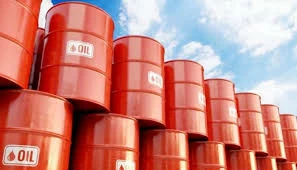
Markets have already begun pricing in these geopolitical risks. Oil prices surged in recent trading to their highest level in nearly four years. This sharp rise followed a series of rapid developments, including Iraq's declaration of force majeure on all oil fields developed by foreign companies, and reports of tit-for-tat attacks targeting major gas fields and facilities in Gulf states such as Saudi Arabia, Qatar, and Kuwait.
Iranian attacks and military tensions have effectively closed the Strait of Hormuz to normal shipping traffic, triggering the worst oil crisis since the 1970s. The impact has not been limited to oil; the near-total closure of the strait has also caused a dramatic surge in natural gas prices in Europe, which jumped by as much as 35% in the past week alone, threatening European energy security and exacerbating inflationary pressures on both consumers and businesses.