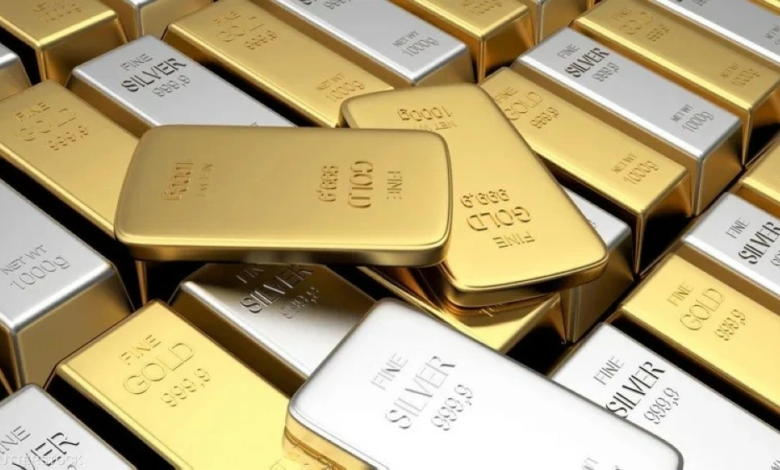

The precious metals markets witnessed a notable decline in gold and silver prices following a strong rally that had generated record gains for investors recently. This drop is part of a natural technical correction, as traders typically engage in profit-taking after sharp increases, creating temporary selling pressure that pushes prices down from their peak levels.
Economic factors affecting the movement of metals
The decline in gold and silver prices is closely linked to movements in the US dollar index and Treasury yields. Historically, there has been an inverse relationship between the dollar and precious metals; when the dollar rises, the cost of holding gold increases for investors holding other currencies, reducing demand and putting downward pressure on prices. Furthermore, the monetary policies of central banks, particularly the US Federal Reserve, play a crucial role in determining the overall market direction. Expectations of continued interest rate hikes or prolonged periods of high interest rates increase the opportunity cost of holding gold, which does not generate a cyclical return, thus driving investors toward other investment vehicles such as bonds.
Historical background: Gold as a safe haven
Over the decades, gold has maintained its status as a safe haven for investors during periods of economic uncertainty and geopolitical tensions. However, financial markets are cyclical; after each rally fueled by fears of inflation or political crises, a period of relative calm or risk reassessment follows, leading to a price decline. This pattern has repeated itself in past financial crises, with strong gains followed by periods of volatility and a tendency toward corrective declines before a new trend is established.
The unique properties of silver and its industrial impact
While silver often follows gold as an investment asset, it stands out as a prime industrial metal used in numerous technology and clean energy industries. This means that a decline in silver prices may not be solely driven by monetary factors, but could also reflect concerns about slowing global economic growth and weakening industrial demand. Therefore, monitoring silver prices provides dual insights into investor risk appetite and the state of global industrial activity.
Future forecasts and the impact of economic data
Analysts and investors are currently focused on upcoming economic data, such as inflation reports and labor market figures, which will be the primary drivers of gold and silver prices in the coming period. Any signs of an economic slowdown could restore the appeal of precious metals as a store of value, while strong data could bolster the dollar and deepen gold's losses. Diversification remains the optimal strategy for navigating these price fluctuations in global markets.