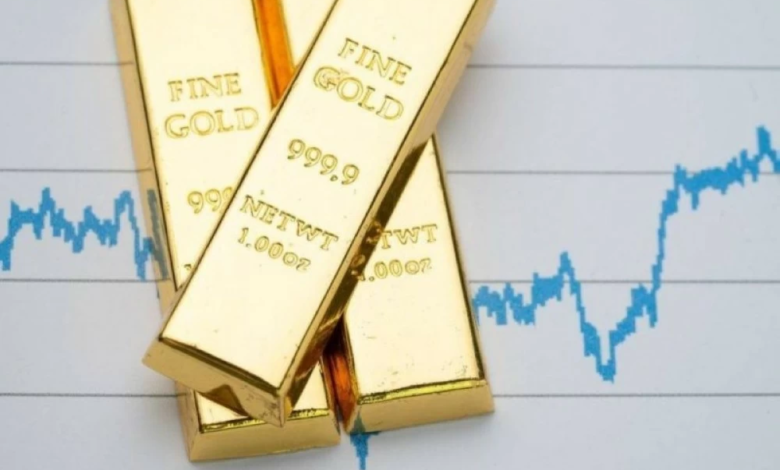

Global financial markets witnessed a dramatic economic earthquake today (Friday) as gold prices plummeted to unprecedented lows in a single trading session, snapping a series of gains and sending shockwaves through the investor and trading community. These sharp movements come amidst a climate of uncertainty and significant volatility gripping global stock exchanges and precious metals markets.
The price collapse in numbers
Looking at the figures that reflected the severity of this decline, an ounce of gold closed yesterday (Thursday) at a record high of $5,377.14, equivalent to 648,268 Saudi riyals per kilogram. However, the picture was completely reversed at the start of trading today, with prices plummeting dramatically to $4,696.12 per ounce, equivalent to 564,959 riyals per kilogram.
With a simple calculation, the precious metal has recorded a massive decline of 12.58%, losing approximately $691.02 per ounce in less than 24 hours. On the local market, and according to calculations in Saudi Riyals, a kilogram of gold suffered a significant loss of 83,309 Riyals in just one day.
Economic context and safe haven volatility
Gold has historically been known as a "safe haven" to which investors turn during crises, wars, or periods of high inflation to preserve the value of their wealth. However, this sharp decline highlights another side to the precious metal as an investment asset subject to the laws of supply and demand and speculation in open markets. Such sharp drops are typically linked to macroeconomic factors, such as the strength of the US dollar, decisions by major central banks regarding interest rates, or widespread profit-taking by large investment funds after periods of consecutive gains.
Investment risks and their impact on markets
This sharp decline reflects the extreme volatility that can characterize the precious metals market and clearly highlights the risks associated with short-term trading (speculation) amidst rapid price movements. While gold is considered a long-term store of value, day traders can suffer significant losses in such circumstances.
This decline is expected to have repercussions on local and regional markets. The jewelry and bullion sector may see increased activity from consumers eager to capitalize on the lower prices, while gold holders who purchased at peak prices may experience anxiety. The economic outlook remains contingent on weekly market closures and upcoming global economic data releases to determine whether this drop is merely a temporary price correction or the beginning of a prolonged downward trend.