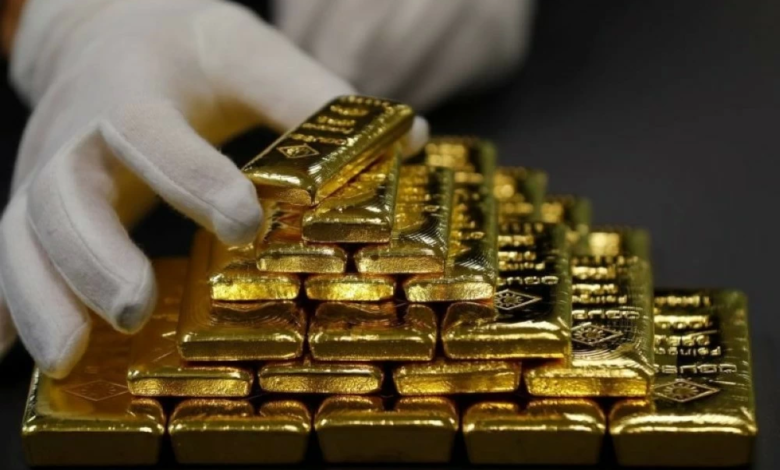

The precious metals markets witnessed a notable shift in direction, with gold prices declining after reaching their highest level in a week. This drop comes as global markets await new economic indicators, prompting investors to take profits and reassess their financial positions in light of current monetary fluctuations.
Reasons for decline and contributing factors
A decline in gold prices is typically linked to several fundamental economic factors, most notably the movement of the US dollar and Treasury bond yields. The inverse relationship between gold and the dollar means that as the value of the US currency rises, dollar-denominated bullion becomes more expensive for holders of other currencies, thus reducing demand and putting downward pressure on prices. Furthermore, any hints from the Federal Reserve (the US central bank) regarding interest rates directly impact the appeal of the precious metal, which does not generate a cyclical return like bonds.
Gold as a safe haven: a historical context
Historically, gold has long been considered the primary safe haven for investors during periods of economic uncertainty and geopolitical tensions. From the hyperinflationary crises of the 1970s to the 2008 global financial crisis, and most recently to the repercussions of the COVID-19 pandemic, gold has proven its ability to preserve value. However, markets undergo natural corrective cycles; every strong rally is followed by tactical profit-taking, which explains the current pullback after the weekly high.
Economic and investment impacts
Internationally, central banks are closely monitoring these movements, with many countries recently increasing their gold reserves to diversify their investment portfolios and reduce reliance on the dollar. Regionally and locally, price fluctuations directly impact jewelry and bullion markets. In the Arab world, gold is a fundamental part of the savings culture, and individual investors often seize opportunities during price dips to bolster their long-term savings.
Future outlook
Gold remains dependent on macroeconomic data, such as inflation rates, labor market data, and monetary policy decisions. Despite the current downturn, economic analysts believe that the factors supporting gold in the long term remain intact, particularly given ongoing concerns about global inflation and sovereign debt, making the precious metal an indispensable component of any balanced investment portfolio.