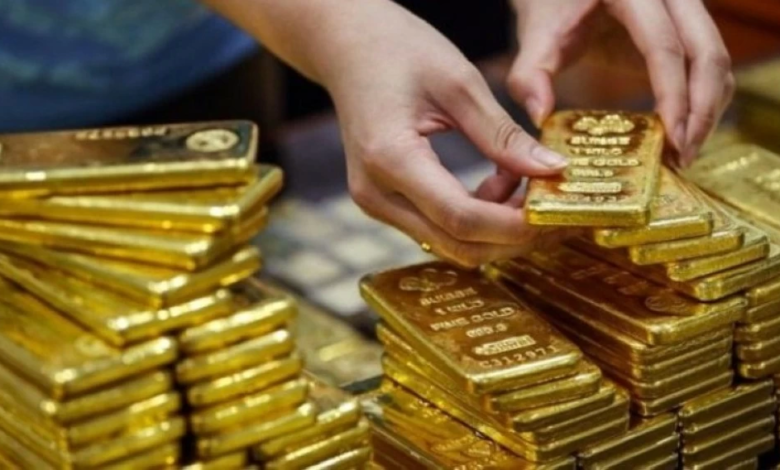

Gold prices continued their downward trend today, influenced by a range of economic and political factors that have impacted global markets. This decline was primarily driven by the release of better-than-expected positive US economic data, which has reduced expectations in financial markets that the Federal Reserve (the US central bank) will cut interest rates in the near future.
Impact of US interest rates on gold
The relationship between interest rates and gold is traditionally inverse; higher interest rates—or those that remain high for longer—increase the opportunity cost of holding gold, which does not generate a periodic return for investors, compared to bonds, treasury bills, and the dollar. Recent data has strengthened the US dollar, making the precious metal more expensive for holders of other currencies, which has contributed to downward pressure on prices.
In more detail, spot gold fell 0.4% to $4,598.52 per ounce. U.S. gold futures for February delivery also declined 0.5% to $4,601.80, reflecting the cautious sentiment among traders amid the uncertain monetary environment.
Performance of silver and other precious metals
Gold wasn't the only loser among precious metals, as silver fell 1.8% in spot trading to $90.70 an ounce. Despite this daily decline, silver is still on track for strong weekly gains exceeding 13%, supported by its exceptional performance in previous sessions, where it reached an all-time high of $93.57.
As for other industrial and precious metals, platinum fell 2.8% to $14.2342 an ounce, while palladium lost 2.3% of its value to $1,759.07 an ounce, after hitting its lowest level in a week during early trading.
Demand for safe havens declined
In addition to economic factors, geopolitical factors have played a significant role in current price movements. The easing of geopolitical tensions in some global hotspots has reduced investor anxiety, leading to a decline in demand for safe-haven assets, particularly gold. Investors typically turn to gold as a hedge against risk and political uncertainty, and as conditions calm down, liquidity tends to flow towards higher-risk assets with potentially higher returns, such as the stock market.
Investors are currently awaiting more economic data and indicators from major economies to draw a clearer picture of global monetary policy trends in the coming period, which will be the main driver of metal prices.