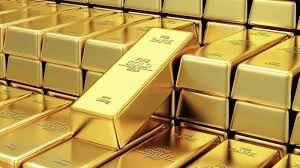

Gold prices fell sharply amid a strong dollar
Global financial markets witnessed a significant shift today as gold prices declined , directly impacted by the strength of the US dollar and the notable rise in US Treasury bond yields. This decline came in response to the US Federal Reserve's decision to maintain interest rates, which diminished the appeal of the precious metal as an investment vehicle that does not offer a fixed return compared to bonds.
Precious metals price details
In numerical terms, gold futures for April delivery fell by 5.2%, equivalent to a loss of $255.30, bringing the price per ounce to $4,640.30. The decline wasn't limited to gold; silver also saw significant losses. Silver futures for May delivery plummeted by 10%, settling at $69.88 per ounce, while the spot price of silver dropped by 8.09% to $69.21.
As for other metals, the spot price of gold fell by 4.05% to settle at $4,622.43 per ounce. The spot price of platinum also declined by approximately 5.55%, reaching $1,910.48, and palladium dropped by 3.16% to $1,428.67 per ounce.
Dollar index and bond yields
On the other hand, the dollar index—which measures the value of the US currency against a basket of major currencies—remained steady at 100.07. Meanwhile, the yield on the benchmark 10-year US Treasury note rose by 5 basis points to 4.306%, reflecting investors' preference for assets with guaranteed returns.
General context and historical background
Historically, gold has had an inverse relationship with both the US dollar and interest rates. When the US Federal Reserve raises or keeps interest rates high, the opportunity cost of holding gold, which does not generate interest, increases. This context explains current market movements, as investors prefer to direct their capital toward government bonds, which offer attractive and guaranteed returns in a high-interest-rate environment, rather than speculating on the volatility of precious metal prices.
The importance of the event and its expected impact
Internationally, this decline in gold prices impacts the strategies of global central banks that rely on gold as a key component of their monetary reserves to hedge against inflation. The strength of the dollar also means that dollar-denominated commodities, such as gold, become more expensive for investors holding other currencies, thus reducing global demand and putting downward pressure on prices.
Regionally and locally, the decline in gold prices presents a strategic opportunity for retail and consumer markets in the Arab world and the Middle East, as demand for gold jewelry typically increases during periods of low prices. However, this drop may pose a challenge for local investors who purchased the metal for speculative purposes, requiring them to reassess their investment portfolios based on new directions in US monetary policy and the dollar's movements.